
sikka.
Social housing for marine life: a research project with Zibel and ADI to design artificial reefs for Maltese waters, printed and cast here, and tested on the seabed first.
- client
- with zibel and adi
- location
- maltese waters
- year
- 2024 – ongoing
- sector
- public · reef research
- system
- concrete diagrid · 3d-printed clay inserts · four prototypes
- made by
- matter make
the project
Malta’s seas are busy. Building along the coast, boats, fishing and noise all press on what lives under the surface. Zibel’s divers have taken tonnes of rubbish off the seabed, and in doing it they’ve also taken away the places some creatures had moved into. Scuttled wrecks help a little, but a ship isn’t shaped for anything to settle on.
Sikka is our try at something better: social housing for marine life. It’s a research project of four or five years, which we started ourselves, with Zibel and ADI. We design the reef structures, draw them up and make the prototypes. Zibel looks after the diving, the operations and getting people involved. ADI brings the science, the environmental assessment and the permits.
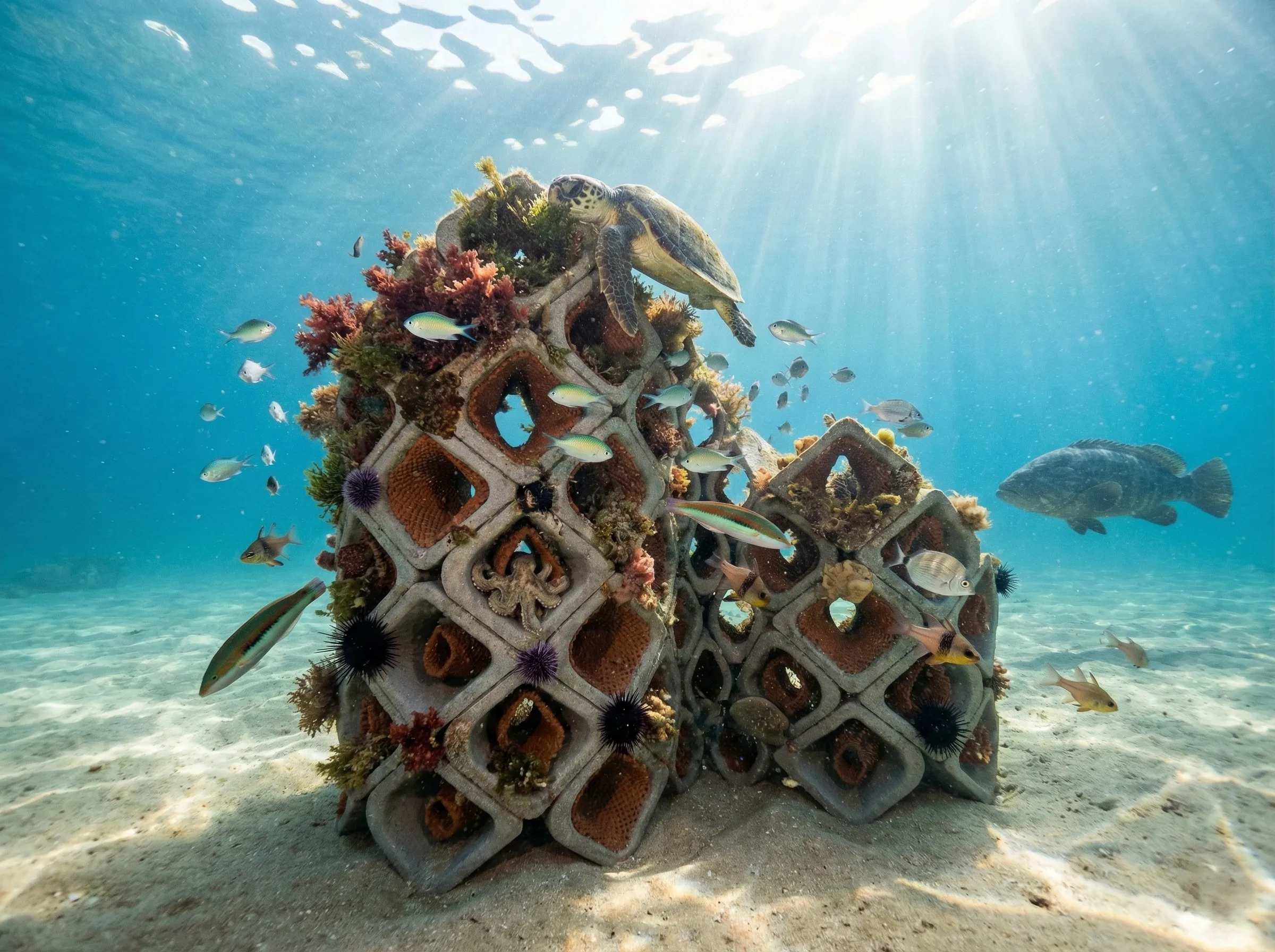
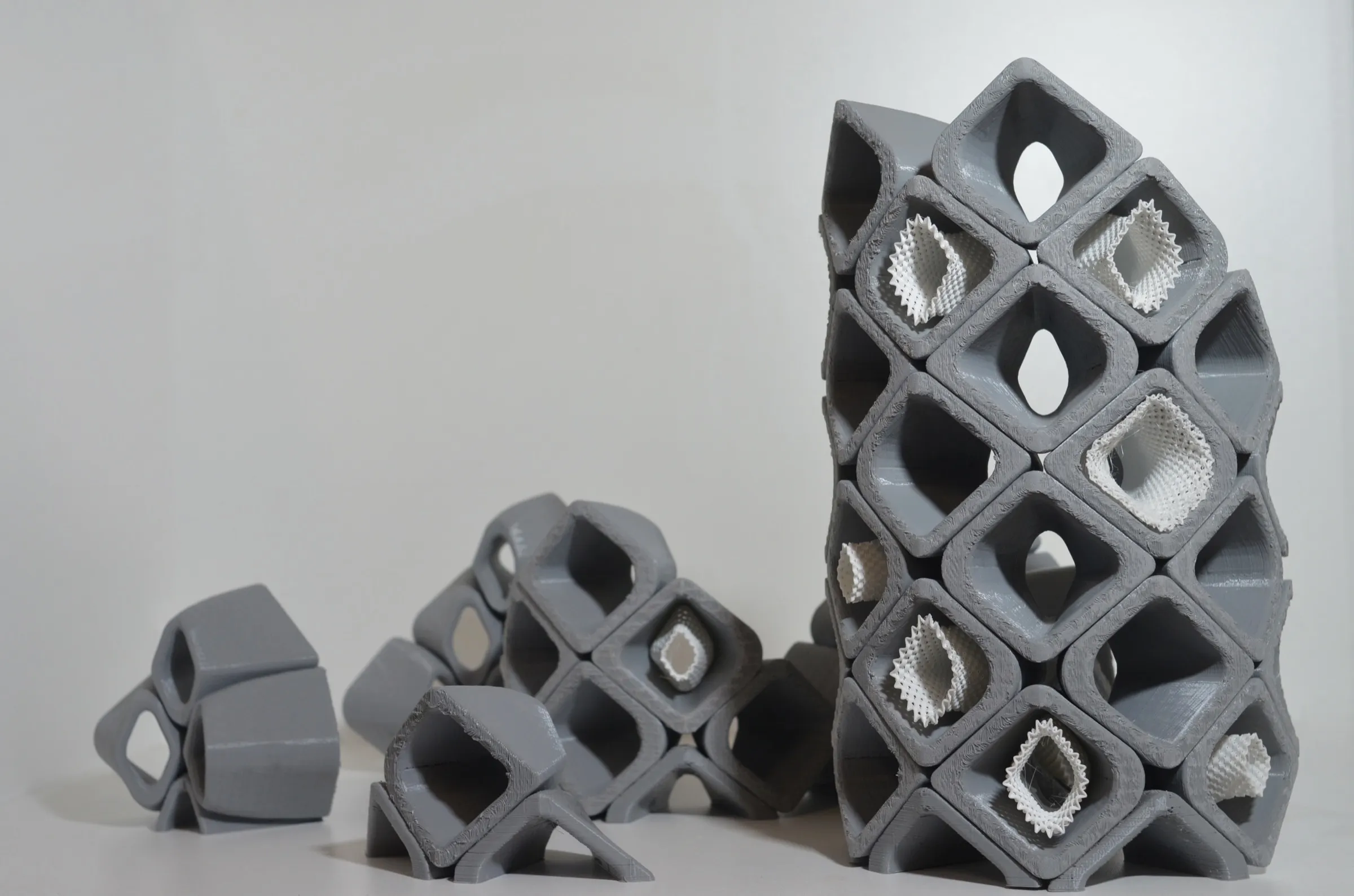
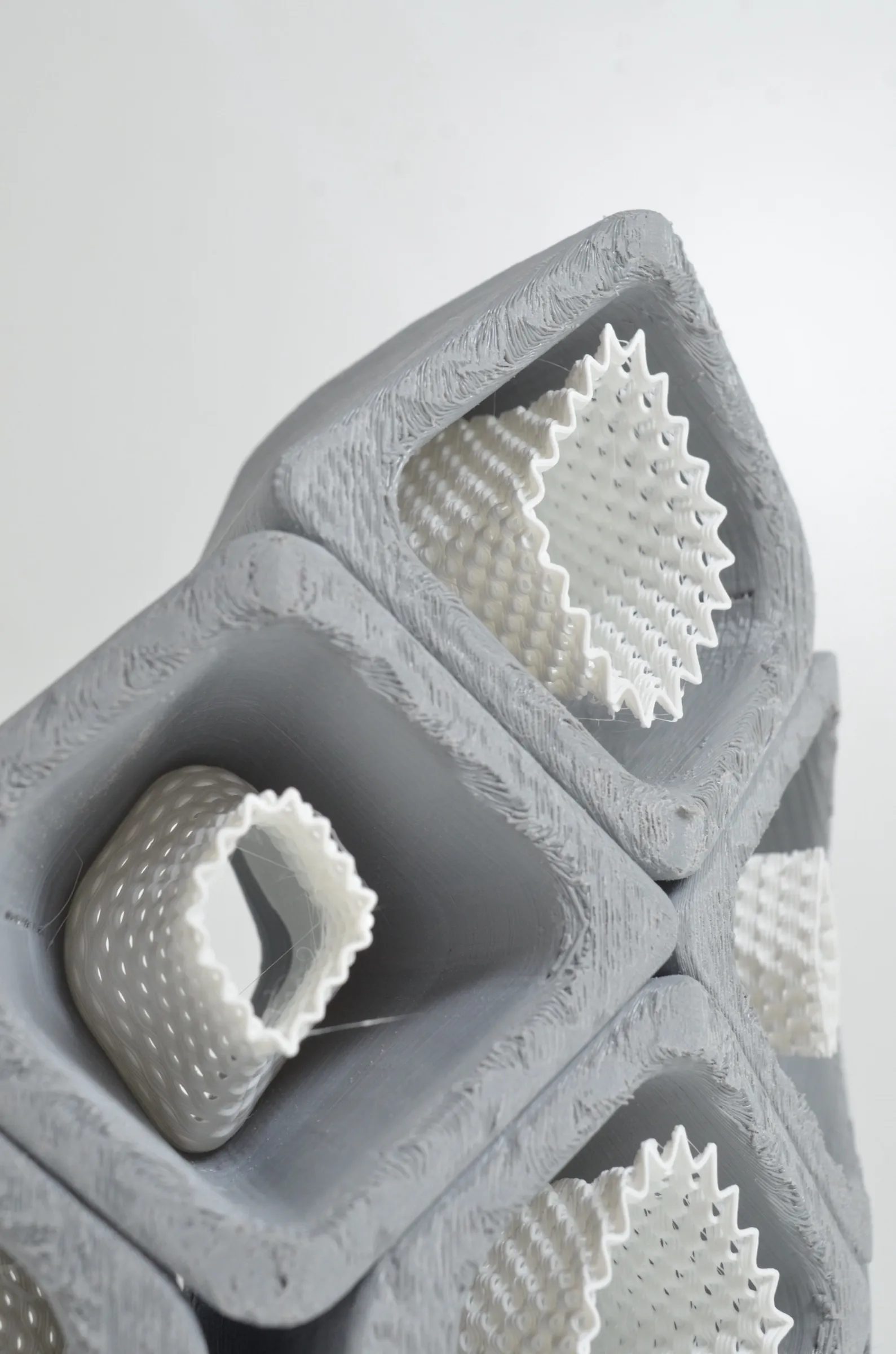
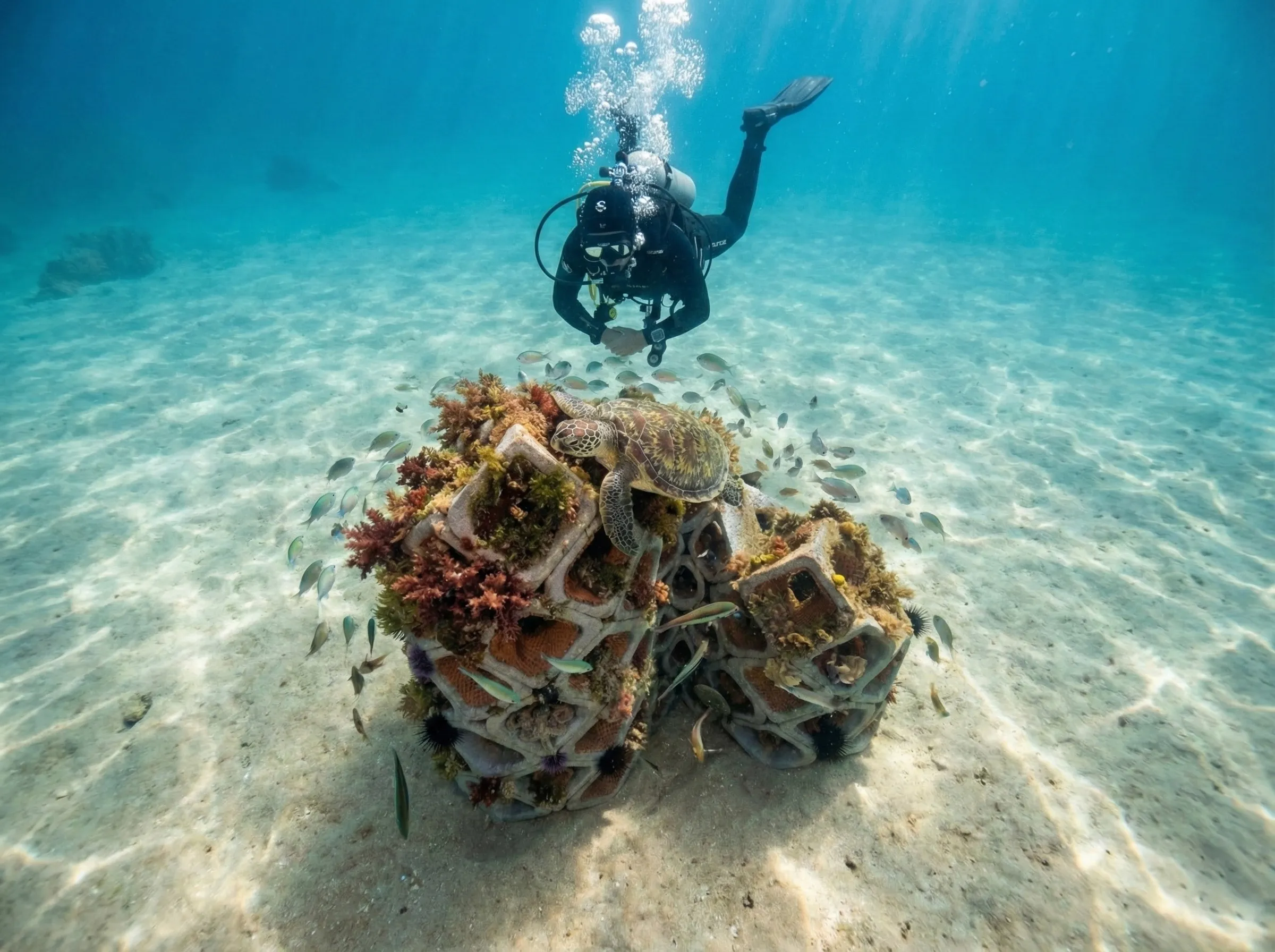
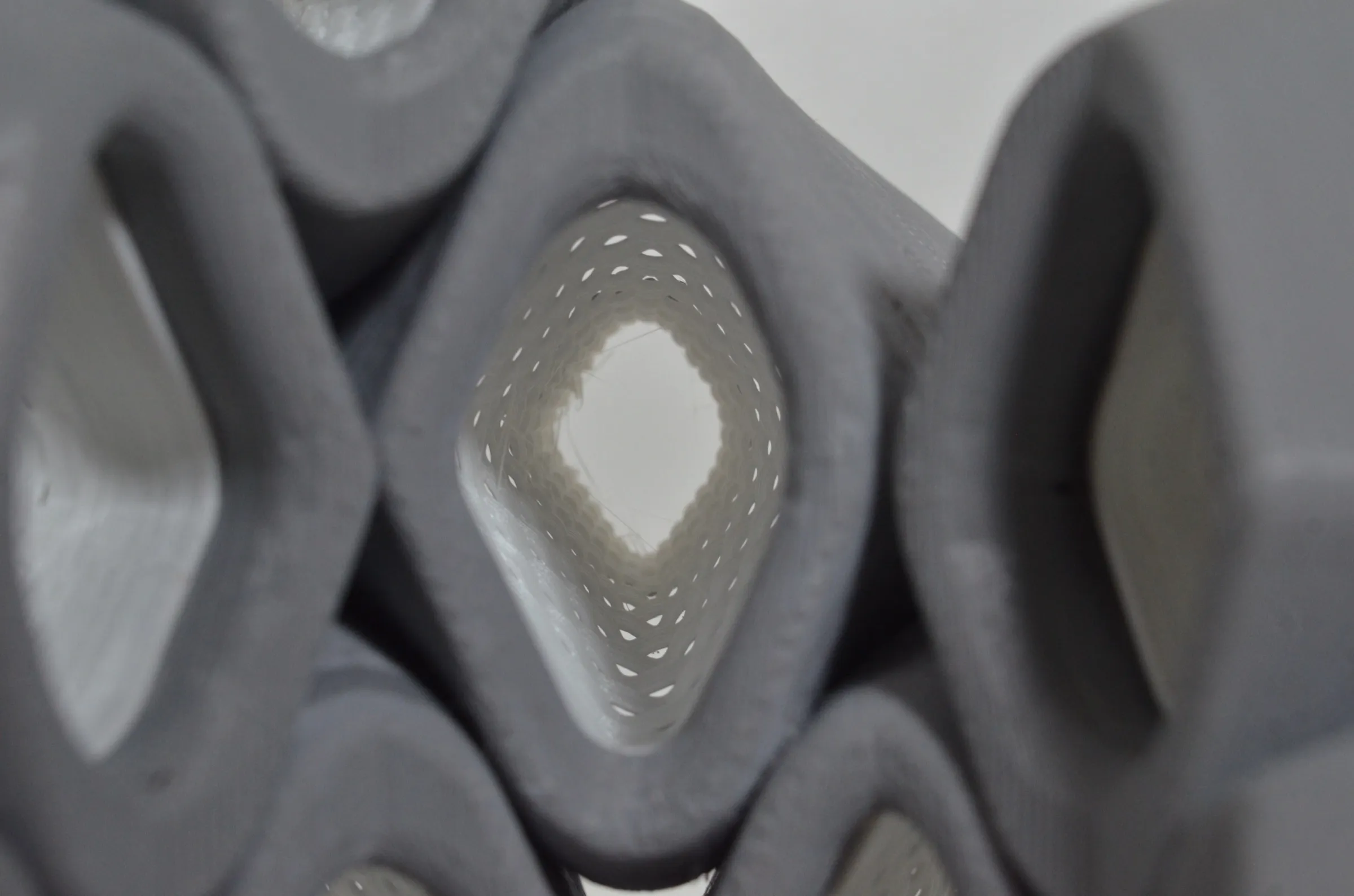
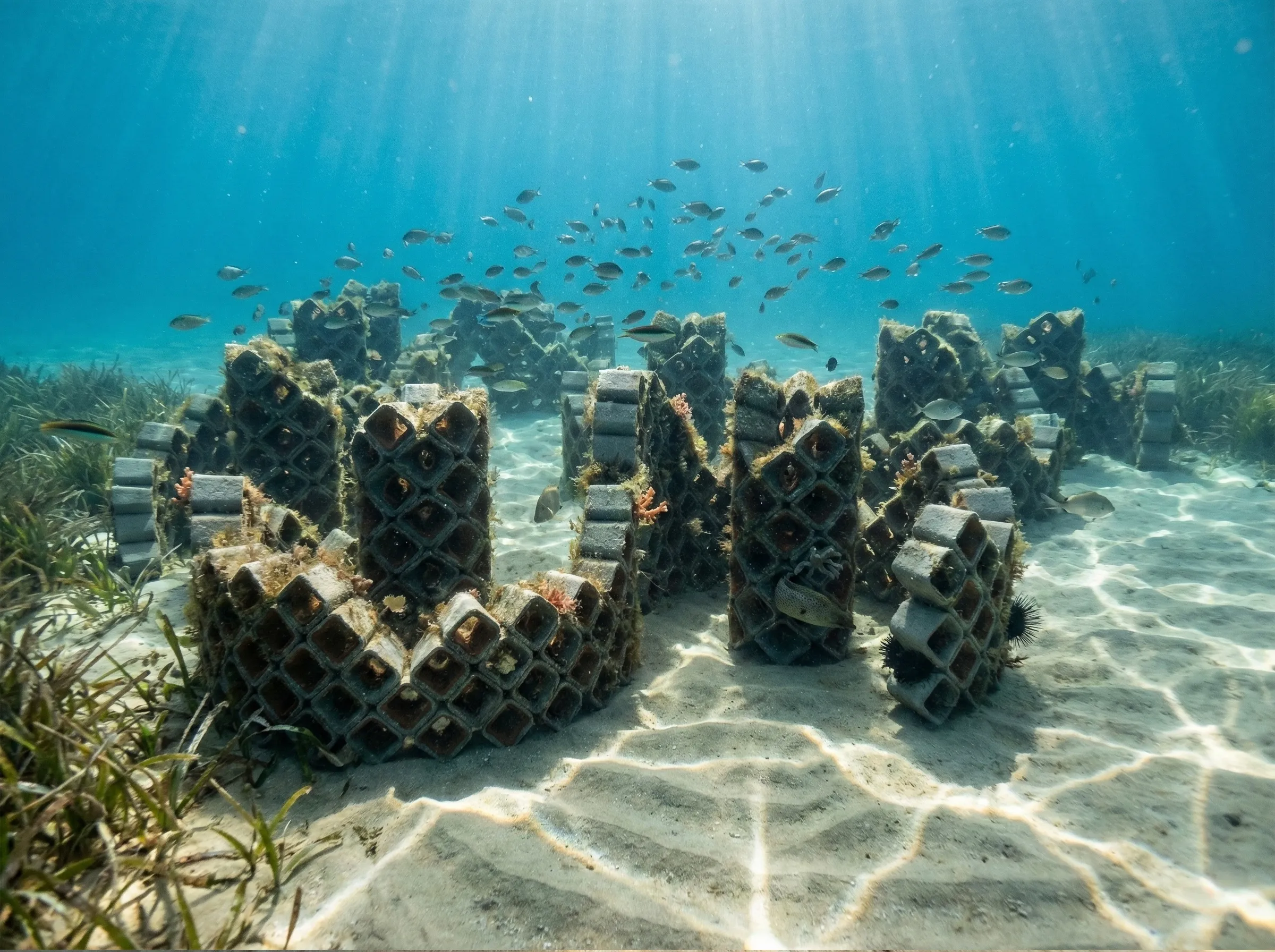
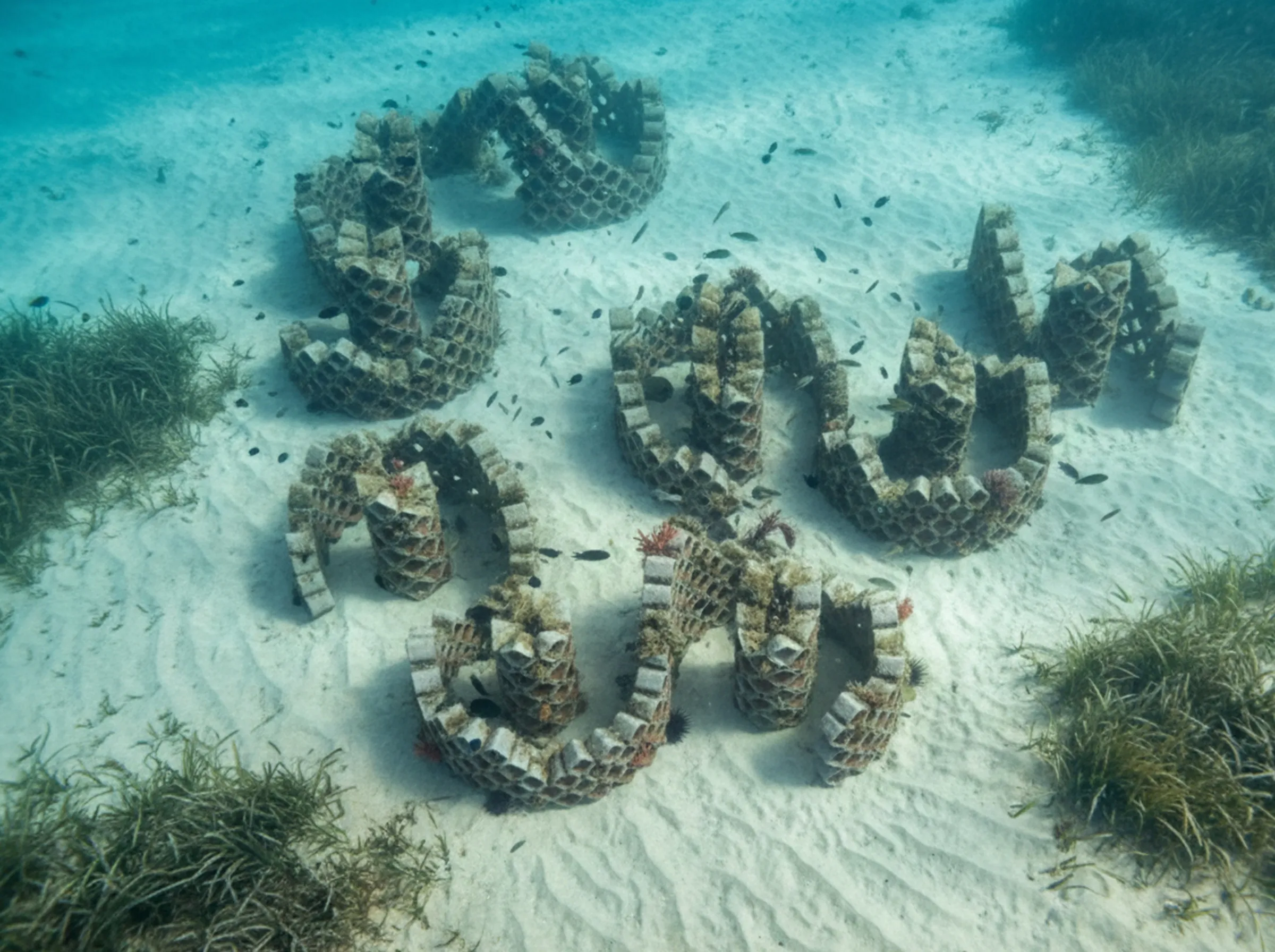
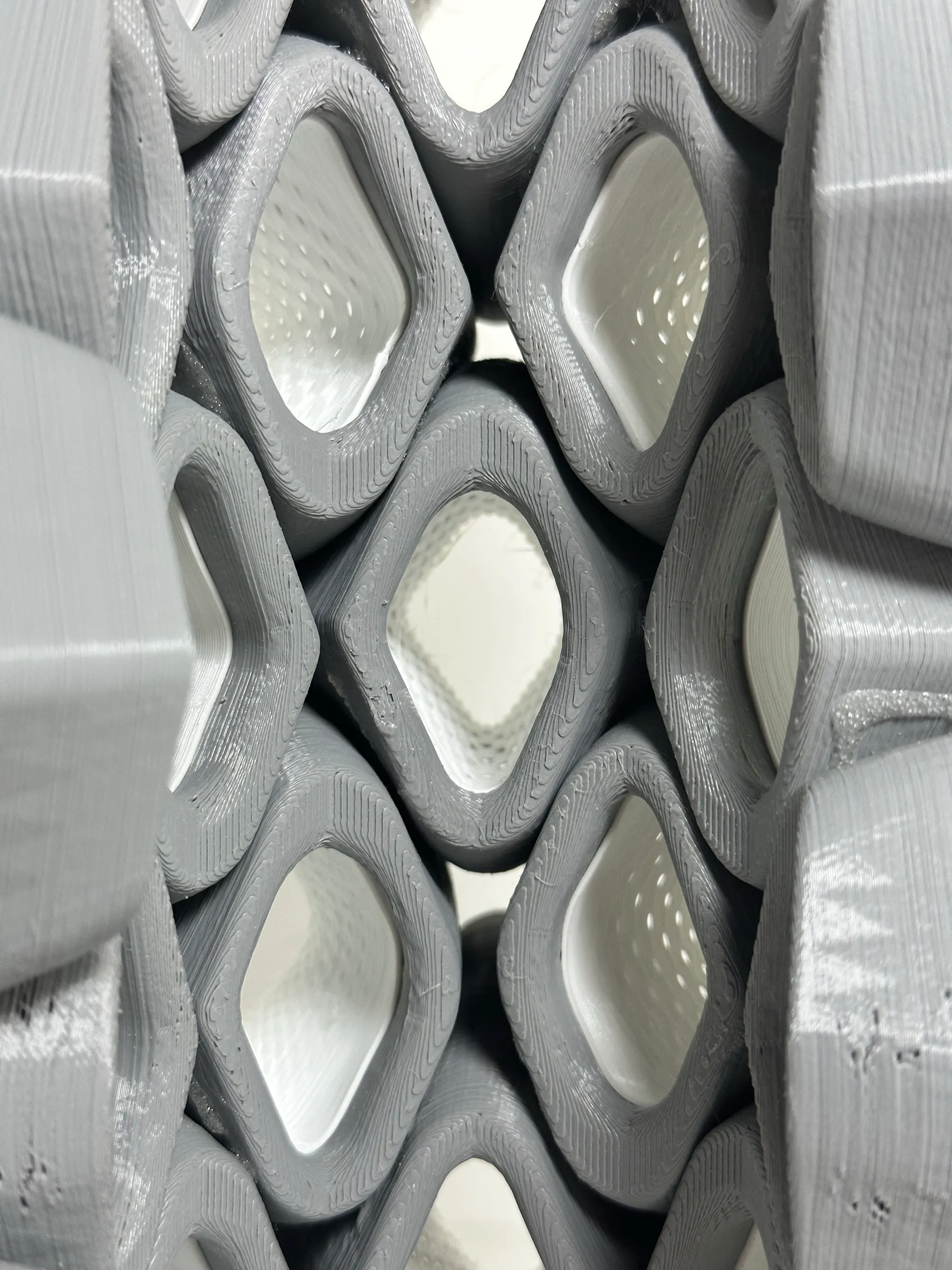
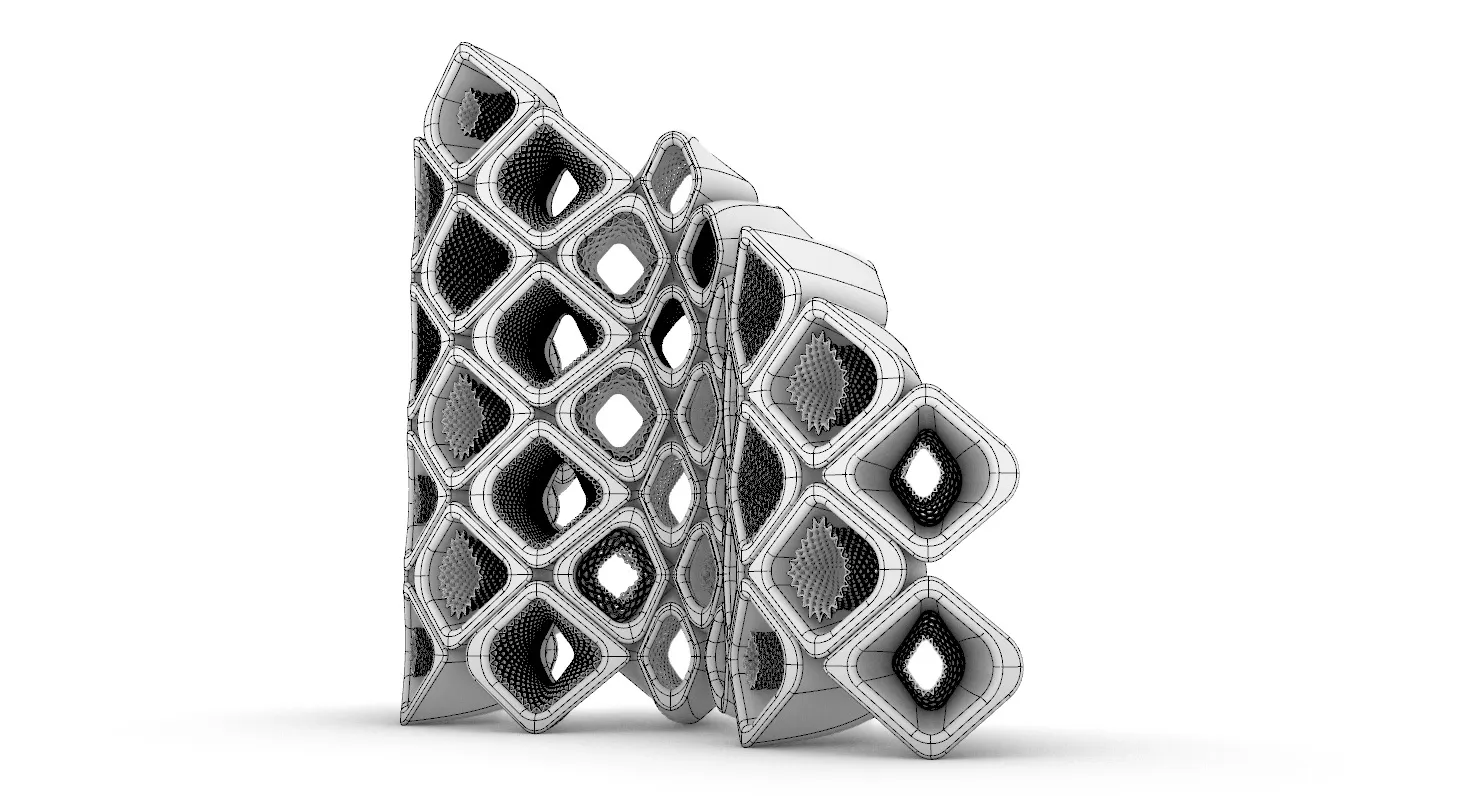
So far there’s a family of four prototypes: a 3D tile for vertical quay walls, a mooring block with small habitats built into it, stackable porous bricks from a simple mould, and the diagrid. The diagrid leads. It’s a concrete shell, for strength and a long life, holding 3D-printed clay inserts that marine life can settle on quickly. We tuned the shape of the inserts to different local species. It’s made at a third of full size for now, and the joints, the inserts and the moulds still need work.
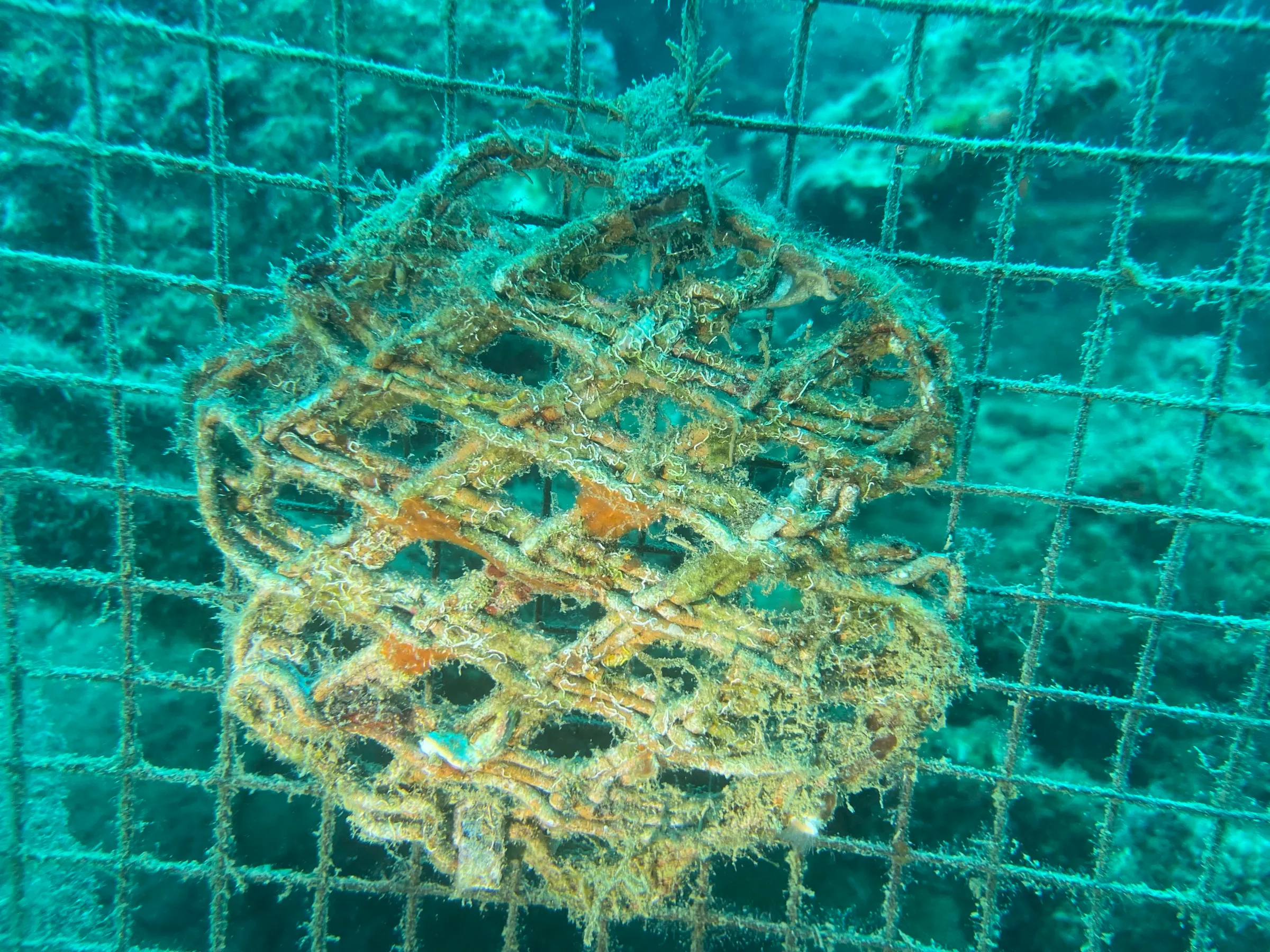
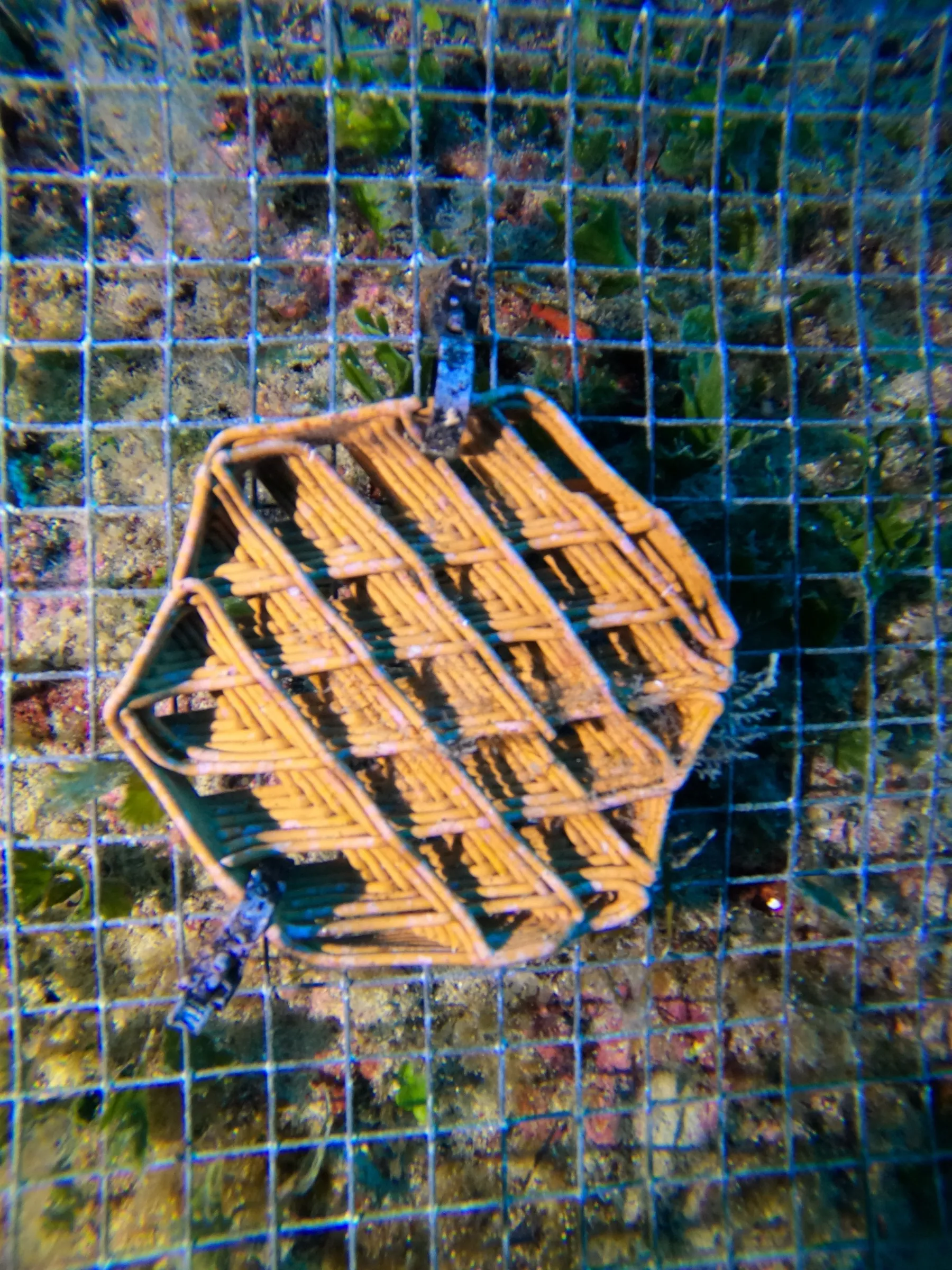
Before any of that, we left plain pieces of printed, fired red earthenware on the seabed, to see how fast things grow on clay. We checked them after a month and after a year. That’s the benchmark the prototypes have to beat.
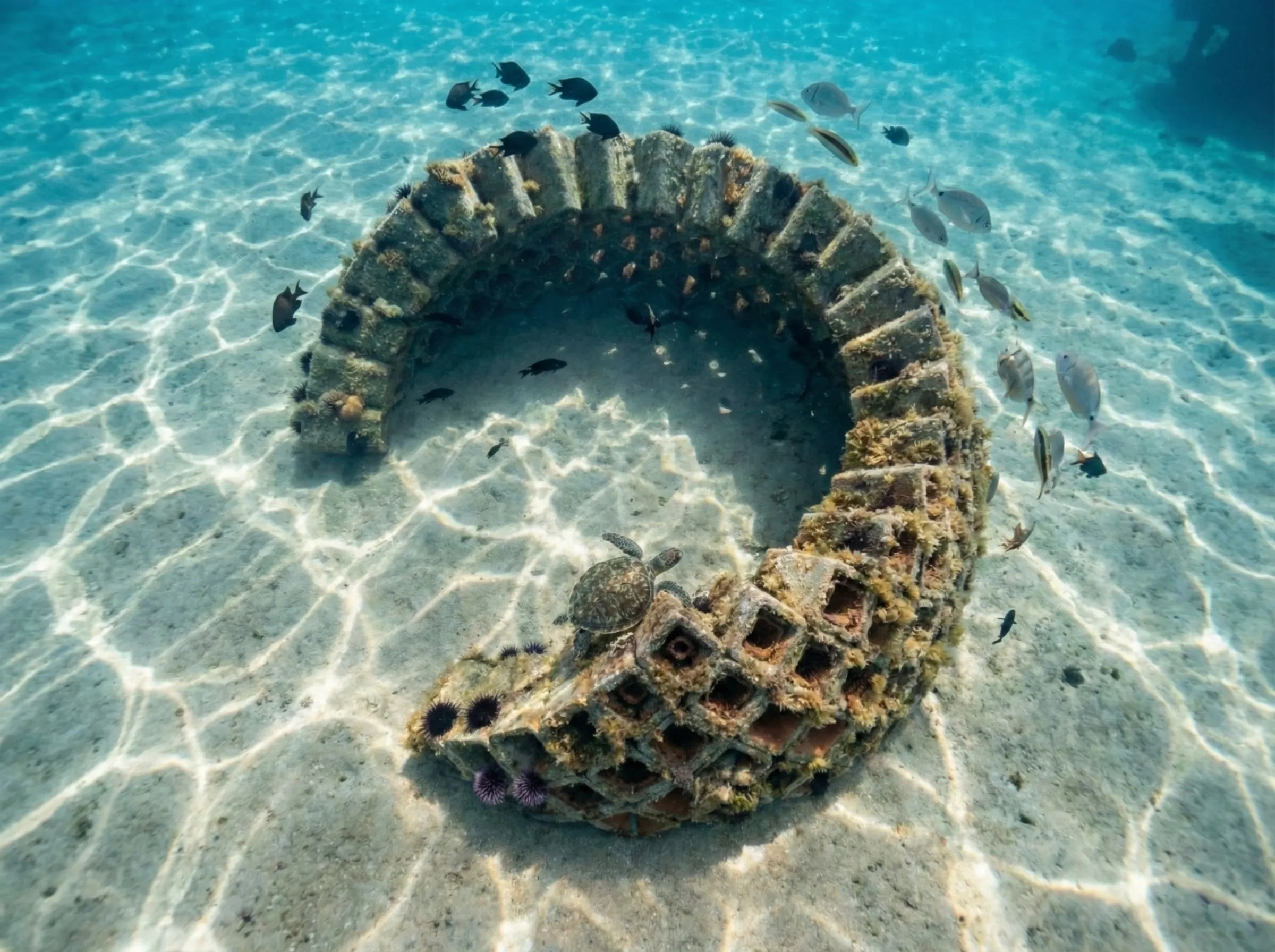
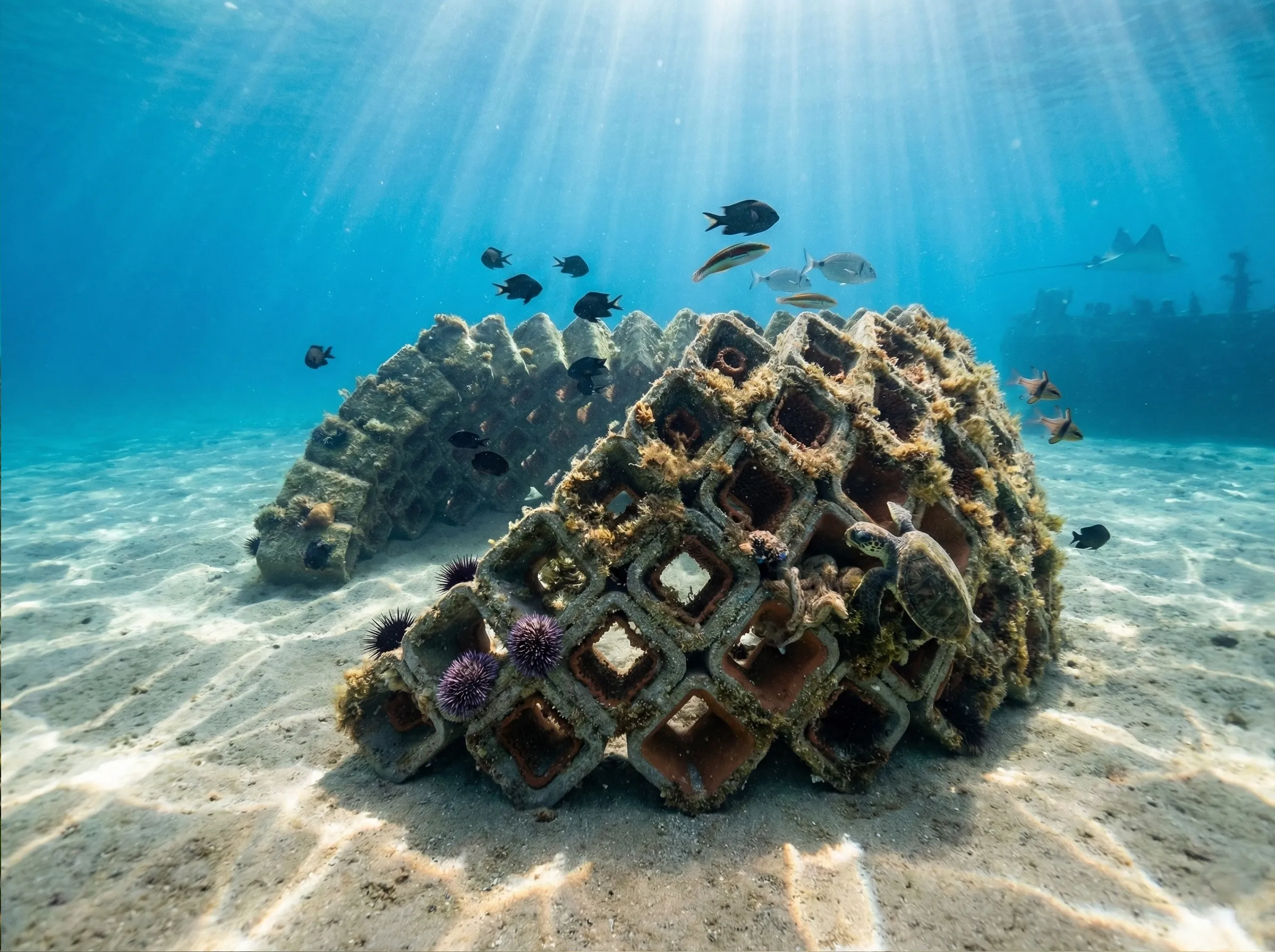
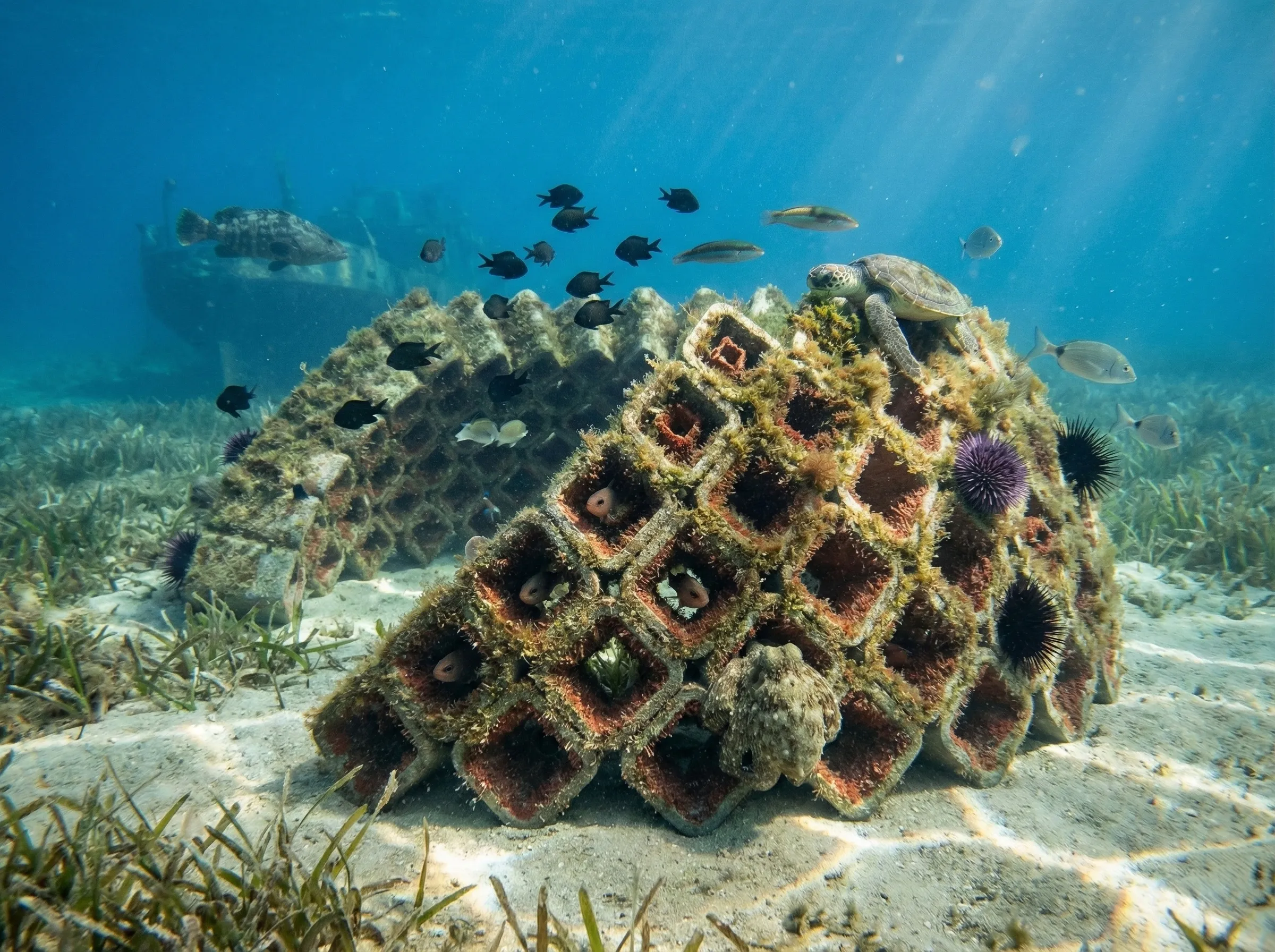
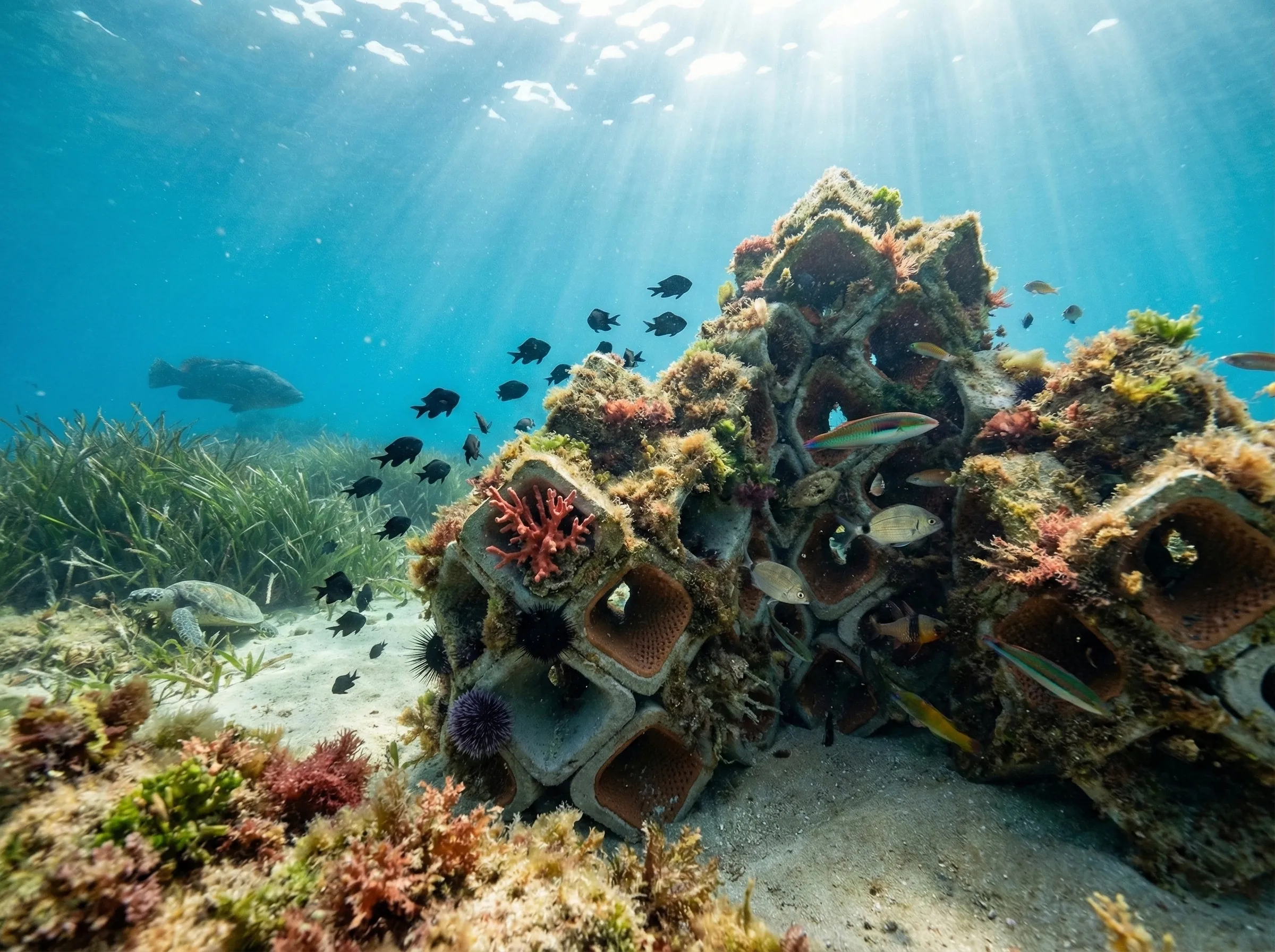
There’s seed funding in, the permits are under way, and we’re looking at wreck sites around Malta and Gozo for a first living lab: a reef divers can visit and scientists can measure. The pictures of whole reefs on the seabed are renders, modelled in Rhino and finished with AI tools. They show where we’re heading, not where we are. When the first one goes down, we’ll show you what actually moves in.
printed for what grows.
- porosity is the brief.
Shadow, pockets and something to hold on to. The shape comes from what needs to live in it.
- concrete for strength, clay for life.
A cast concrete shell carries the load and lasts. Printed clay inserts give marine life somewhere to settle, fast.
- tested before it’s trusted.
Fired earthenware left on the seabed for a year set the benchmark every prototype has to beat.