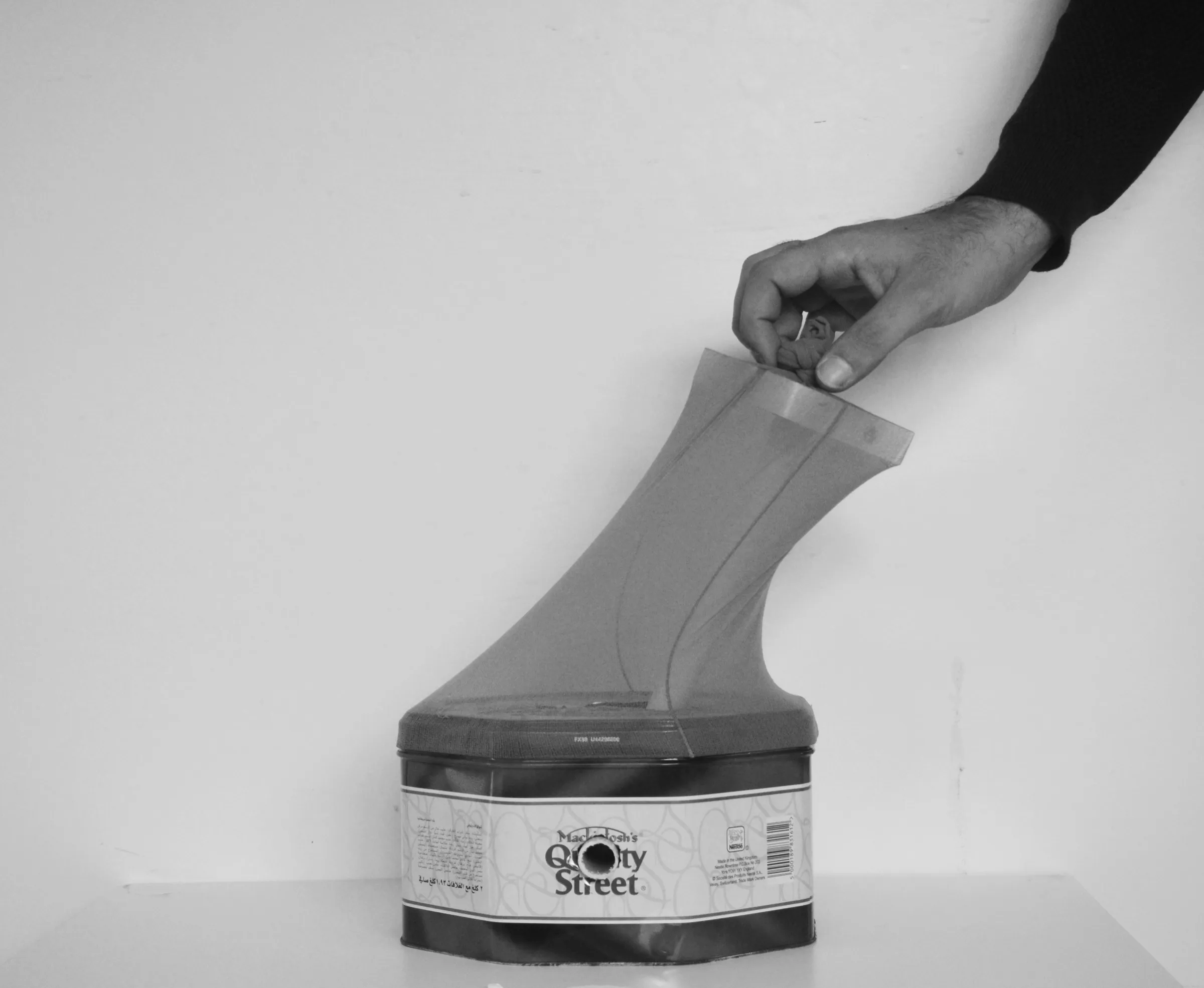
incremental sheet forming.
used in · farsons obh reception deskA metal sheet pushed into shape a fraction of a millimetre at a time by a single robot-held tool — no die, no mould, so every panel can be different.
the project →farsons obh

Material and making experiments that push a project forward. When the part a project needs doesn’t exist, we develop the process to make it — and then it joins the toolkit.
a form that we tease out of those materials as we allow them to have their say in the structures we create.
We’re interested in mechanisms, not narratives. We bring the material into the conversation and listen to what it tells us. Some tests fail; failure is information. What survives becomes a process we can offer the next project.
A metal sheet pushed into shape a fraction of a millimetre at a time by a single robot-held tool — no die, no mould, so every panel can be different.
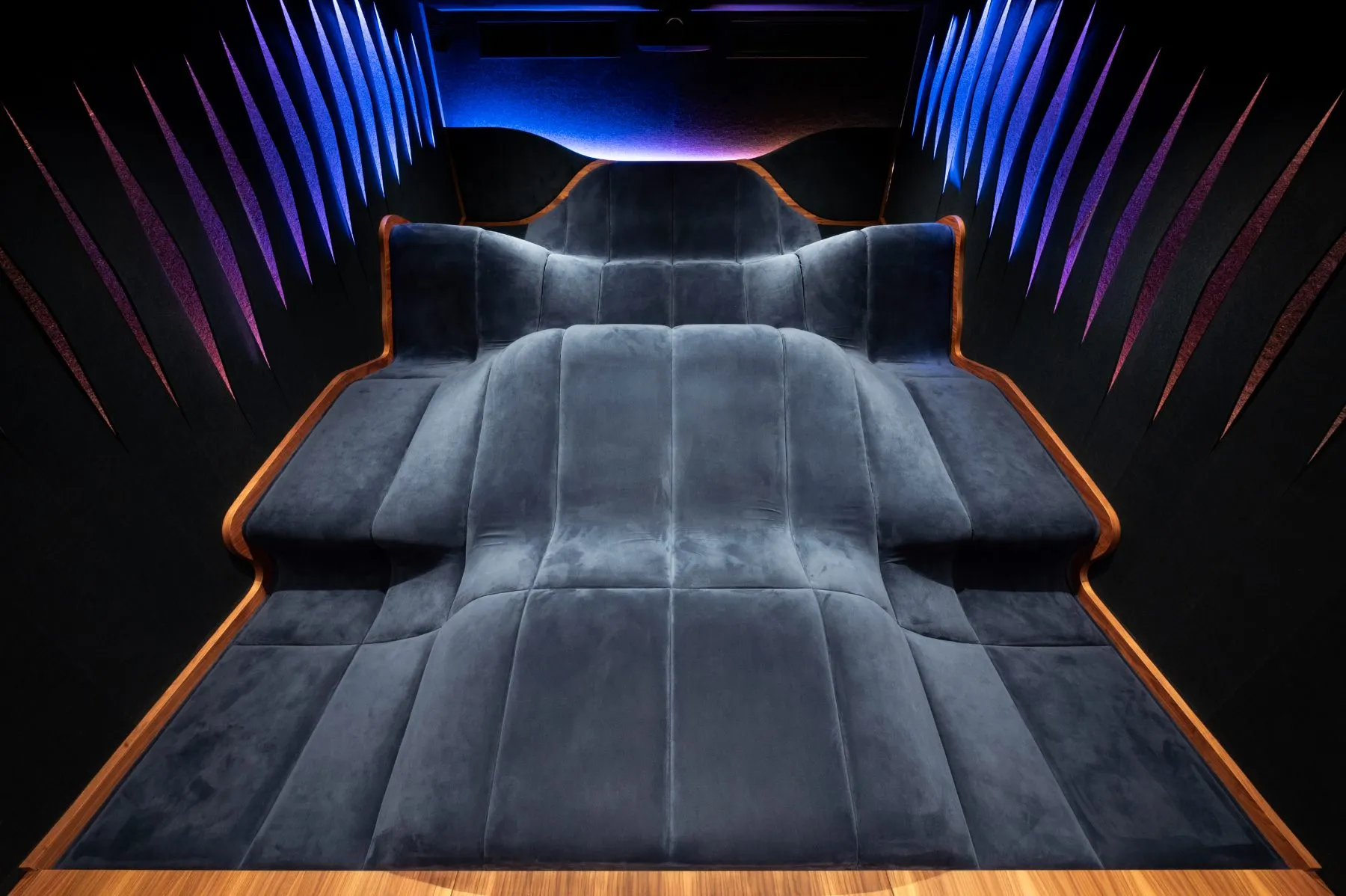
the project →The robot carves a free-form surface straight from the 3D model. The undulating seating landscape was milled, not assembled.
the project →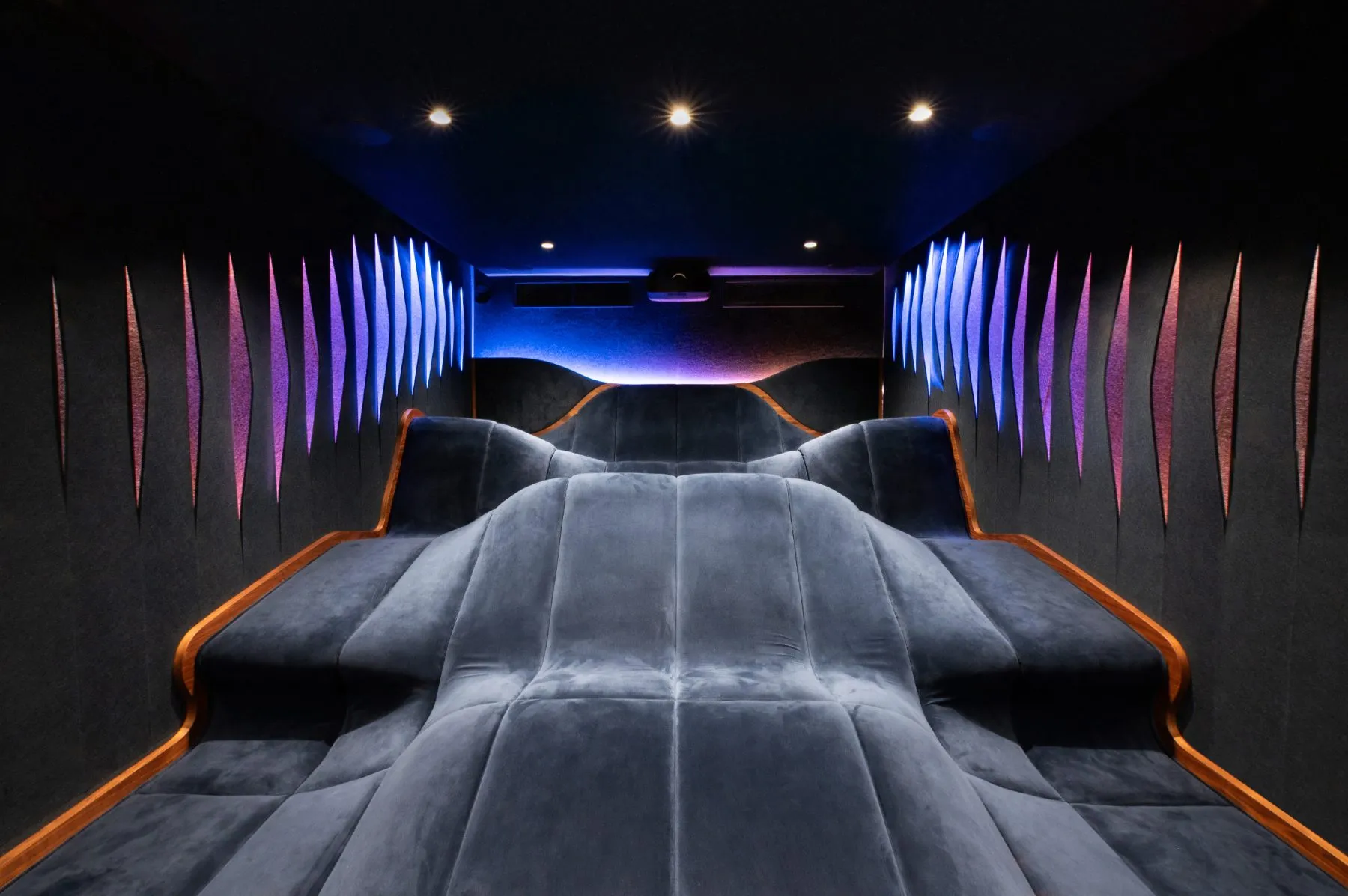 cinema visiona
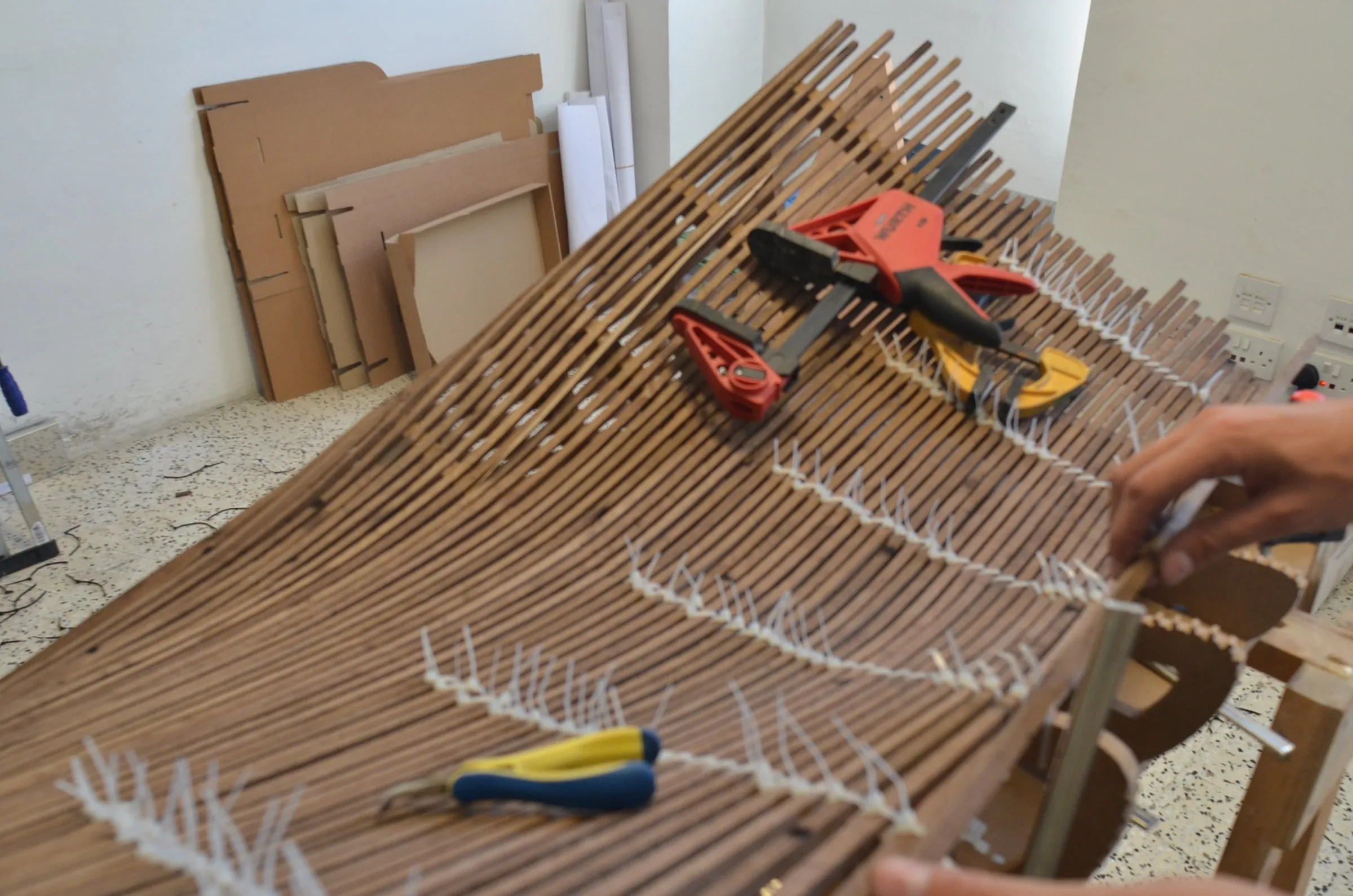
Walnut strips softened in the steam box and bent by hand to the drawing, one at a time — a free-form surface rationalised into strips that can actually bend.
the project →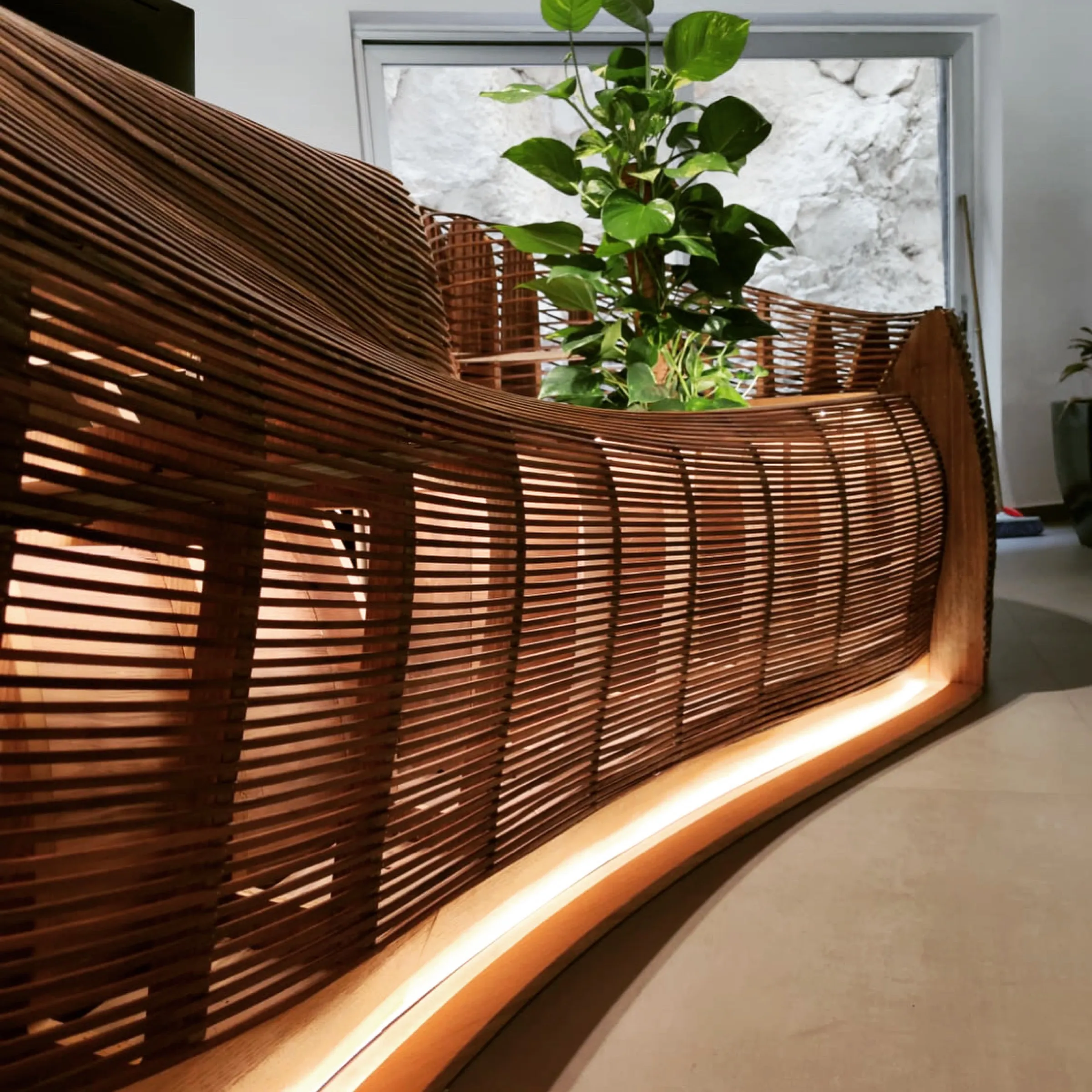 spinola park
A tree in timber, built up in layers: a footing and collars round a central column, then primary and secondary branches, two layers of each. Every member came out of the 3D model and was cut on our robotic arm.
the project →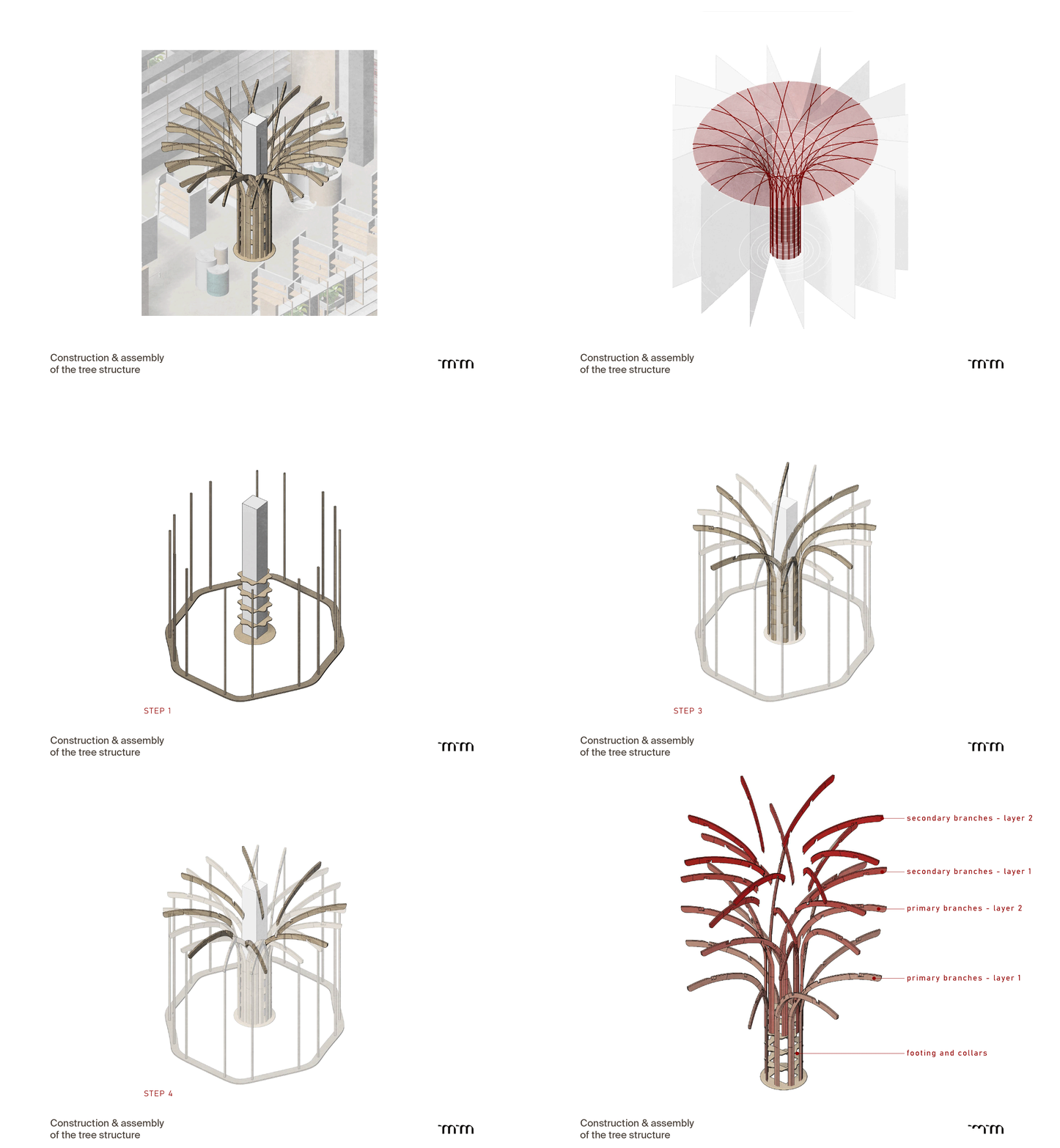 pearl
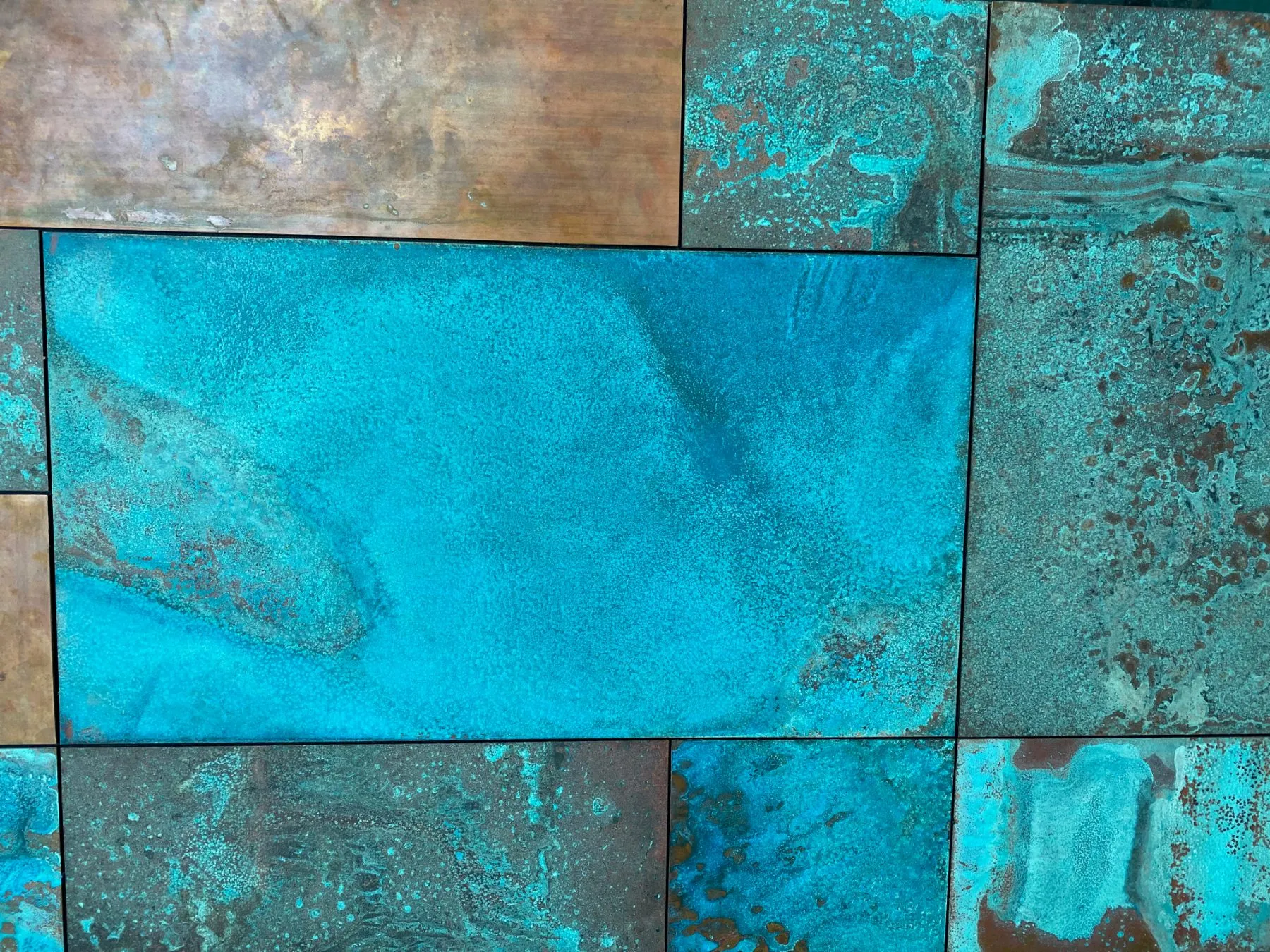
Copper aged on purpose. Controlled patinas developed in the workshop, so the colour is chosen, not left to the weather.
kikka home →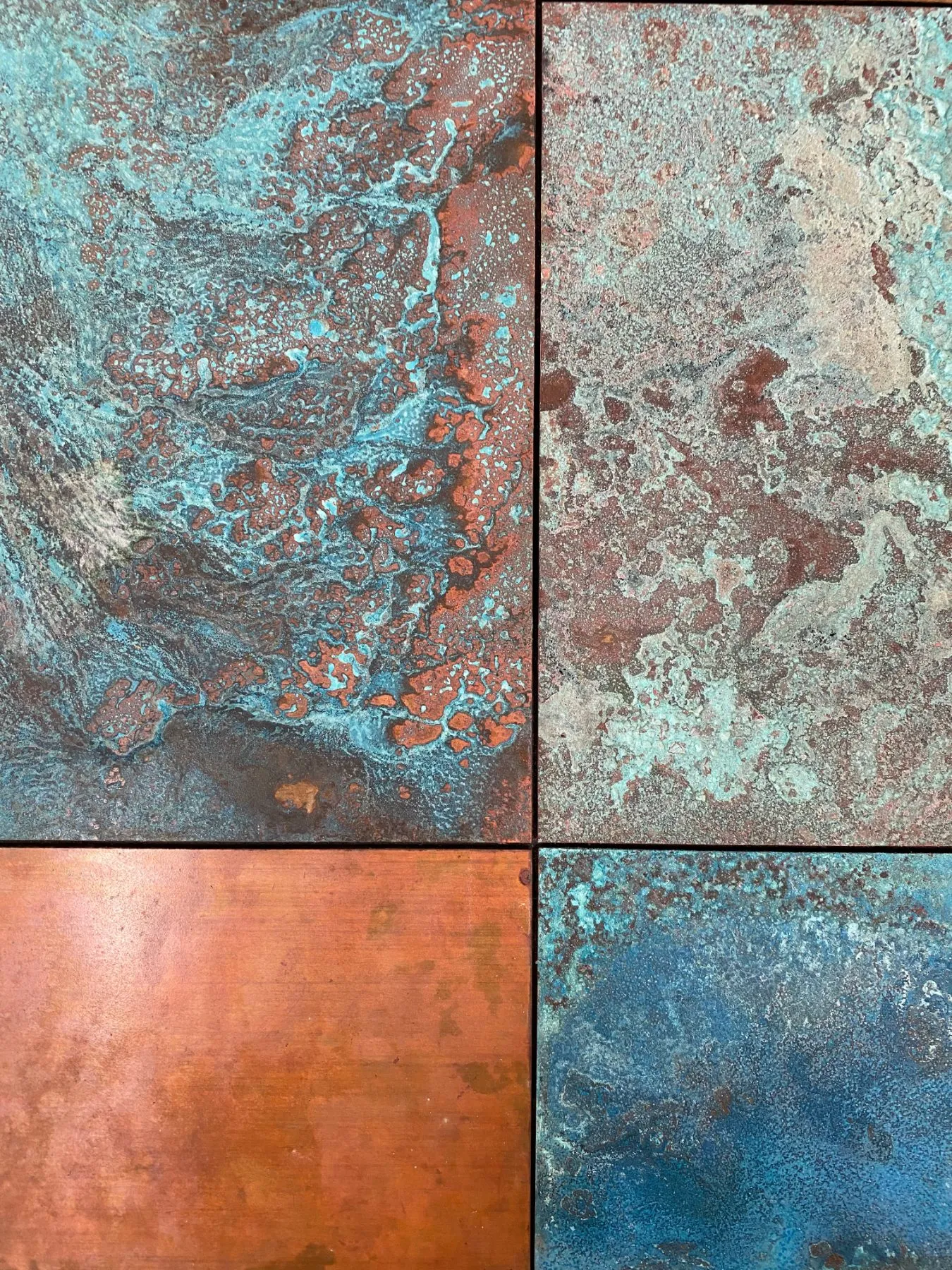 copper
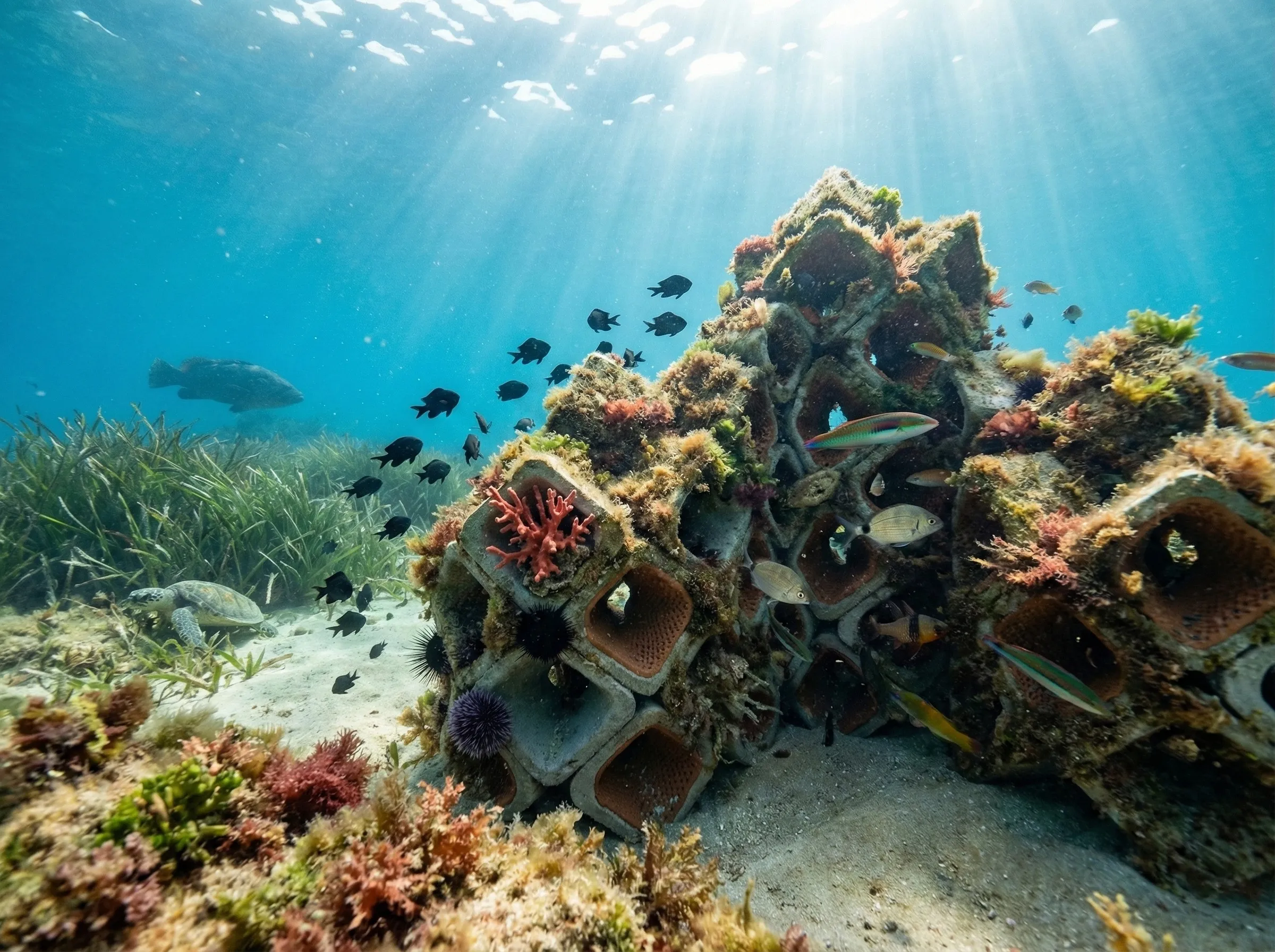
Clay built up coil by coil on our WASP delta printer. For Sikka, test pieces of printed, fired red earthenware spent a year on the seabed so we could see what grows on them.
the project →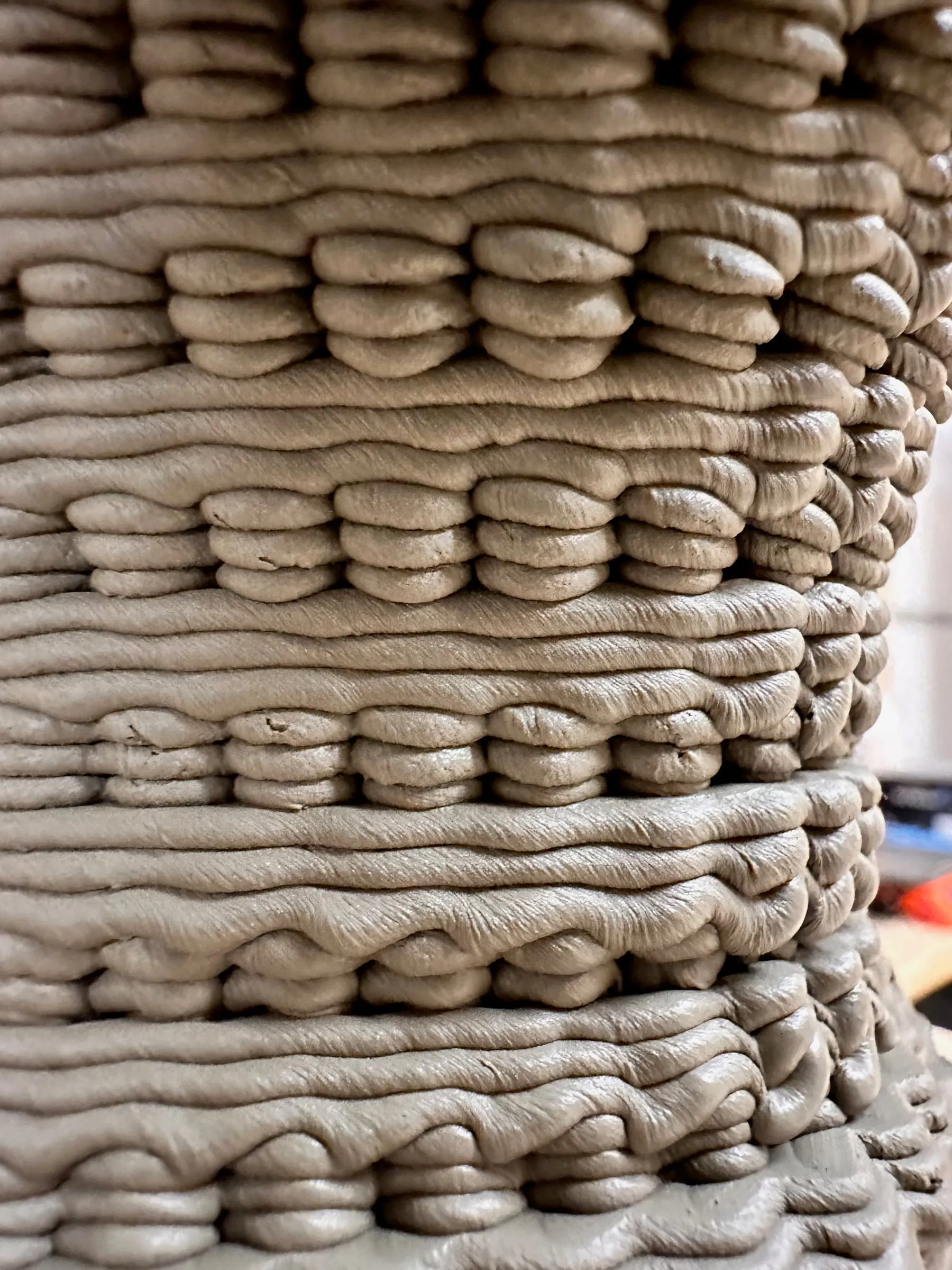 sikka
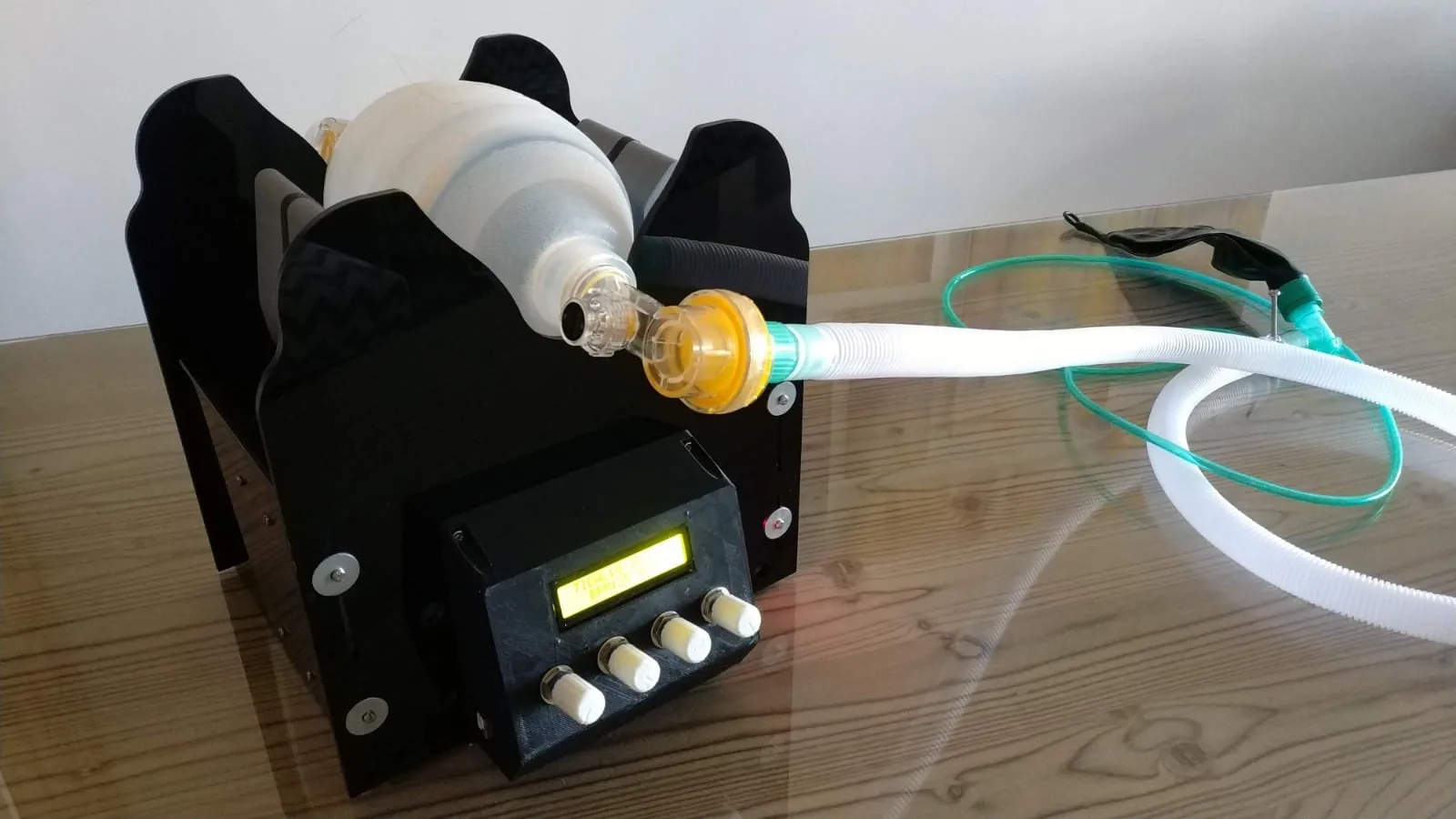
A plan B for the pandemic: an open-source ventilator that squeezes a standard ambu-bag, with control over volume, rate and PEEP. Laser-cut, 3D-printed and machined, so a makerspace anywhere could build one. We made it with James Attard Kingswell of Toly Group, building on MIT’s open-source E-Vent. Toly’s engineers planned a run of 2,000, and clinicians at Mater Dei tested the prototype.
 e-vent mlt
For twelve years our university programme with UoM has brought students into the workshop to test the same processes we use on projects. They leave knowing how to make; we leave with better questions.
34 student projects, 2016–22 →teaching & workshops — ask us →