
make what matters: why bespoke?
A lot of what we make is joinery: kitchens, wardrobes, library walls, a reception desk. Why we think made-to-measure is worth it, at home or at work, and how a piece goes from your question to a wall that fits.
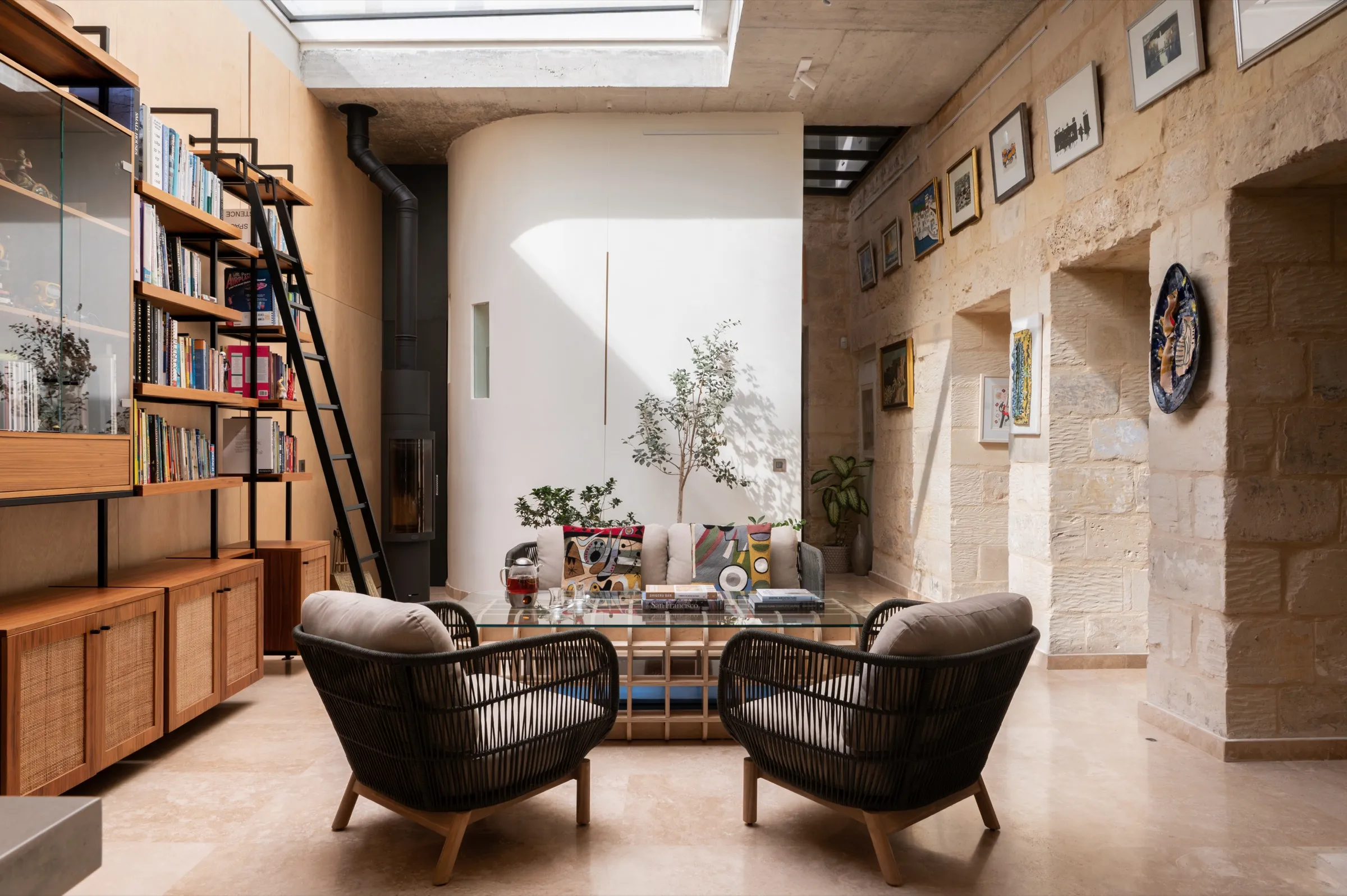
A lot of what we make is joinery. A kitchen. A wardrobe that finally fits. A library wall with a rolling ladder. A reception desk bent from walnut strips. This is a short note on why we think made-to-measure is worth it, at home or at work, and what to think about before you start.
What bespoke joinery is
Bespoke joinery is timber made for one particular room: cabinets and shelves, wardrobes and desks, doors, windows and panelling. Off-the-shelf furniture is made for an average room that doesn’t exist. Bespoke starts from yours — the awkward corner, the wall that isn’t quite straight, the way you actually use the space.
You choose the materials, the finishes and the details. Our job is to help you choose well, and then to make it.
Why it’s worth it
It fits
A piece made for the room uses all of the room. A wardrobe can wrap around a bed, like the sleep cove we designed for a small bedroom. A bookshelf can fill the corner nobody knew what to do with. At work, storage can be built around what you actually store, so the place stays tidy without anyone trying.
It says something
A reception desk is the first thing a visitor meets. The one we made for Spinola is steam-bent walnut with a planter growing out of it, and it tells you something about the place before anyone speaks. At home it’s quieter: a piece that looks like the people who live with it.
It’s made with care
When the people who draw a piece also make it and fit it, there’s nobody to hand a problem to. That keeps us careful. Good timber, joined properly and fitted well, is made to be lived with for a long time.
It can change with you
Families grow; teams move desks around. Where it makes sense, we design joinery as a kit of parts, so shelves, hooks and desks can move later. Our Rejig wall started that way.
Before you start
Ask what it’s for
We start with the simplest question: what is this for, and what does it want to do? Then the practical ones:
- What does the space need to do?
- What do you need to store, and how much of it?
- How should the room feel at seven in the morning?
Talk about the budget early
Bespoke joinery varies a lot in price, with the material, the finish and how complicated the piece is. We’d rather know your budget at the start and design to it. Our own quoting tool prices material, machine time and finish as we design, so the budget is part of the design, not a surprise at the end.
Choose materials for what they do
We pick materials for what they do and show them for what they are. A few we keep coming back to:
- Walnut: warm, dark, and happy to be bent with steam. The Spinola desk, Manouche, the walnut-lined lounge at Kikka home.
- Birch plywood: stable, strong and honest at the edges. Rejig is cut from it.
- Veneered boards: a timber face on a stable core, for big flat surfaces — like the laser-cut ash ceiling at Open Tinkers.
- Recycled PET felt: soft, quiet and made from plastic bottles. It’s on the walls at Panta and in Cinema Visiona.
Work with the people who’ll make it
Look for a team that listens, shows you what it has made, and lets you hold a sample before anything goes to site. Best of all, the people who draw it are the people who build and fit it. Then nothing gets lost in the handover.
How a piece gets made, with us
1. We talk
Bring the question, a photo of the room, a sketch on the back of an envelope. We listen, measure, and ask what it’s for.
2. We draw
Drawings and 3D models, so you can see the piece before it exists. You change what you want to change.
3. We choose the materials
Timber, finishes and hardware, with real samples in your hand.
4. We make it
In our workshop. The drawing becomes the cutting file for the CNC, and the finishing is done by hand. A bigger or more complicated piece takes longer, and we’ll be straight with you about how long.
5. We fit it
The team that drew it installs it, so it fits the room and works the way it should.
In short
Bespoke joinery isn’t a luxury finish. It’s furniture that fits the room, the budget and the way you live or work, made by people who’ll stand behind it.
If you have a corner, a wall or a whole room in mind, bring the question. We’ll bring the drawings, the samples and the machines.