
what a reef wants from clay.
Sikka is our research into reefs for Maltese waters. Before we put a reef on the seabed, we wanted to know a simpler thing: does the sea take to printed clay at all? So we printed some, fired it, and left it down there for a year.
Sikka is Maltese for reef. It is a research and prototyping project we started ourselves, to give marine life in Malta more places to live. We design the structures and make the prototypes in our workshop. Zibel, the environmental NGO, looks after deployment and brings people along. Adi Associates, an environmental consultancy, looks after the permits and the science.
the problem, as our partners put it.
Malta’s coast is under pressure: development, overfishing, boat traffic, pollution, noise. There was a twist we hadn’t expected, too. When Zibel clears rubbish from the seabed it lifts tonnes of it, and with it some of the hard surfaces that sea life had already moved into. Wrecks help, but their shapes and materials aren’t made for quick settling.
Malta has no tropical coral reefs, and Sikka isn’t trying to grow one. The aim is plainer than that. Much of the seabed around a wreck is bare sand: poor in fish, rich in what lives inside it. Put a hard surface there, the right one, and more can settle.
concrete for strength, clay for life.
Our lead design is a diagrid: a concrete frame for strength and a long life, with printed clay inserts set into it to give the first settlers something to hold on to.
The inserts are where the design work is. Pockets of different sizes for different inhabitants. Layers that step out and twist, so the surface area keeps growing. Gaps that hold a little water. These are intentions, written on our drawings. Nobody has measured them yet.
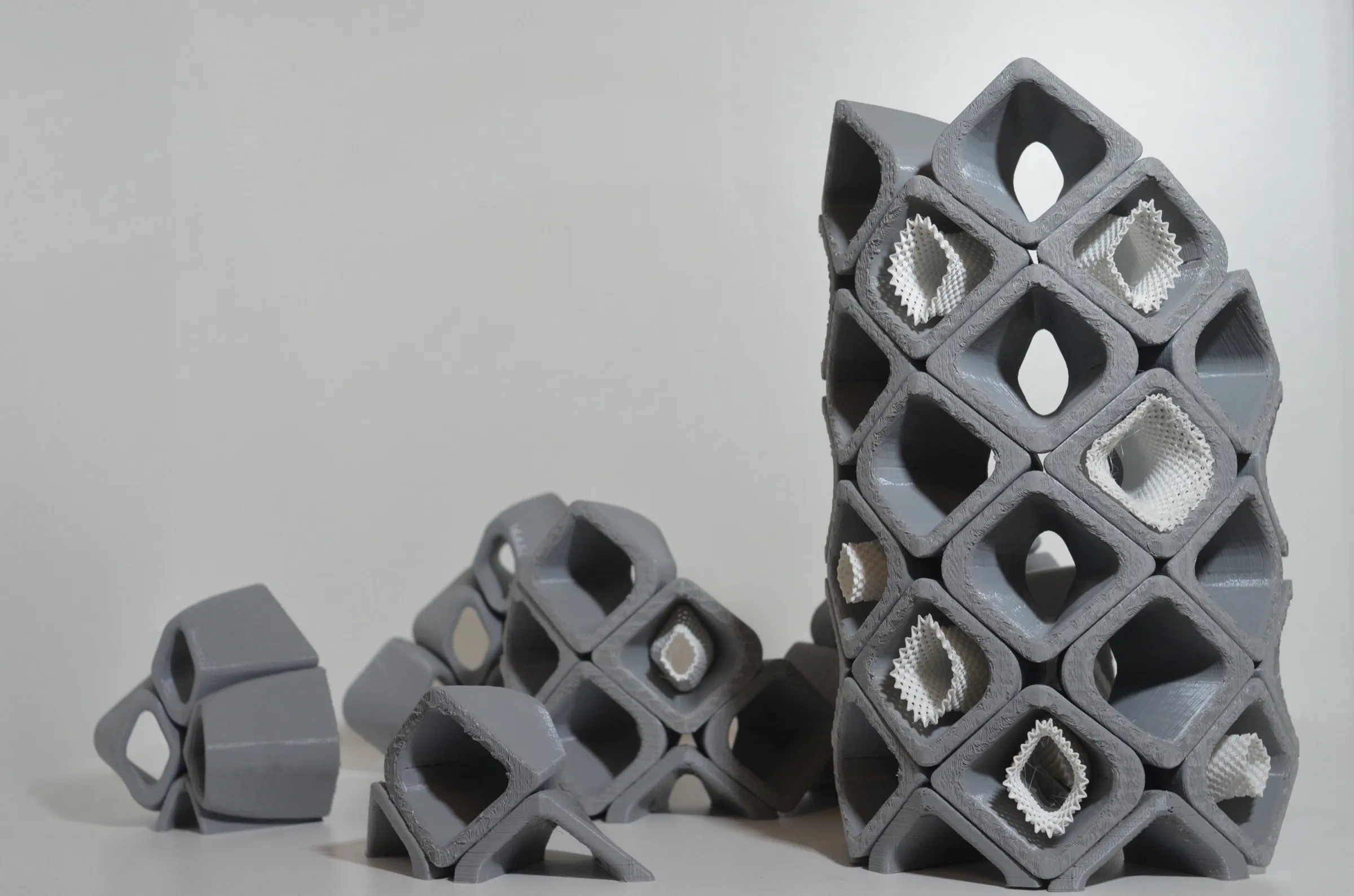 The diagrid at 1:3, printed in plastic to work out the joints and the moulds before anything is cast.
We print the clay on our WASP clay printer, layer by layer, straight from the model.
a year in the sea.
Before any of that goes down, we wanted the simplest answer first: what happens to printed clay in the sea? So we printed four test pieces in red earthenware, each with a different surface: a hexagonal lattice, a fine meandering line, and two textured blocks. We fired them, fixed them to a mesh frame and put them on the seabed. Then they were photographed every few months, for about a year.
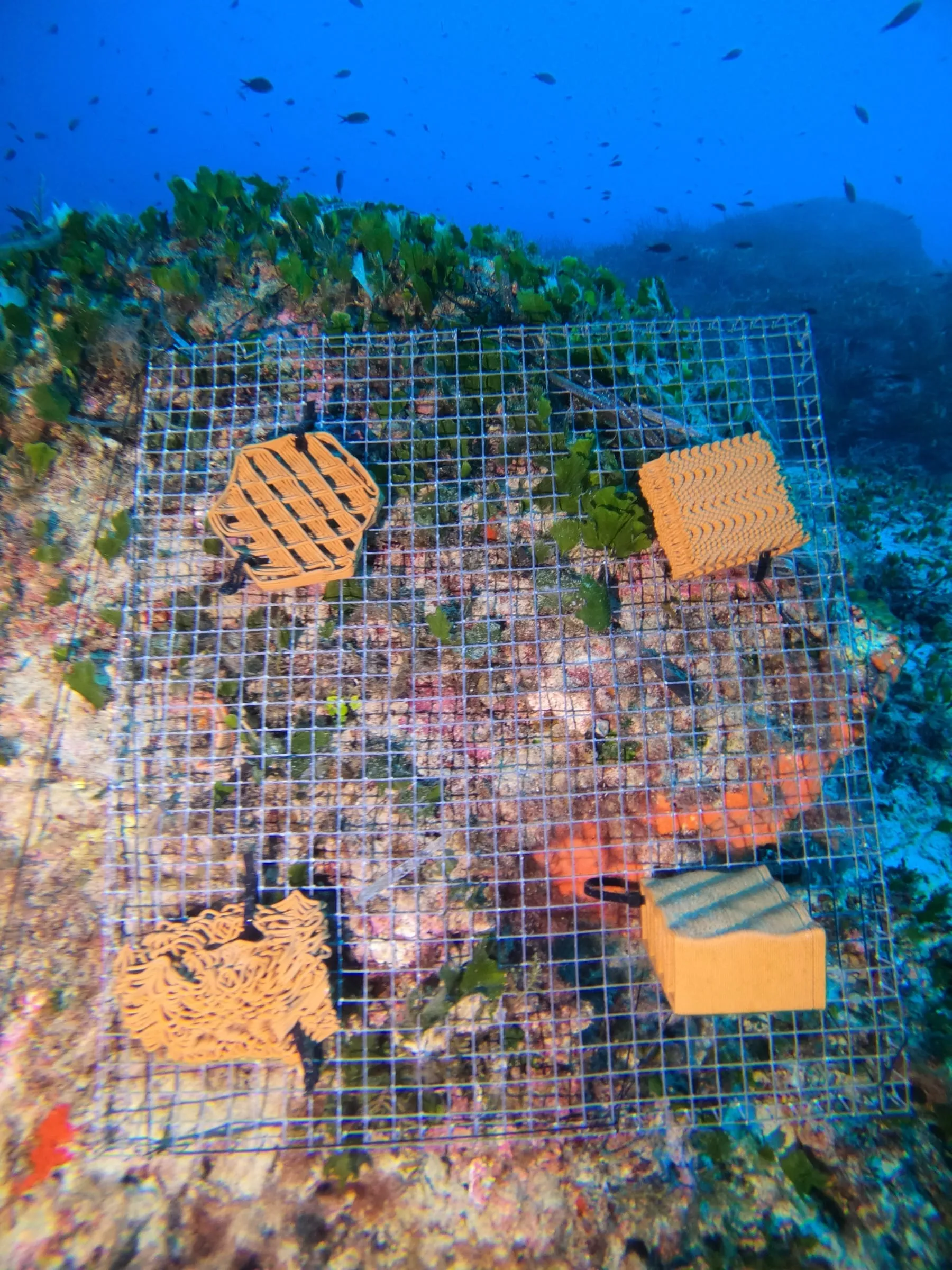 The test frame about a month in: four printed pieces, four surfaces.
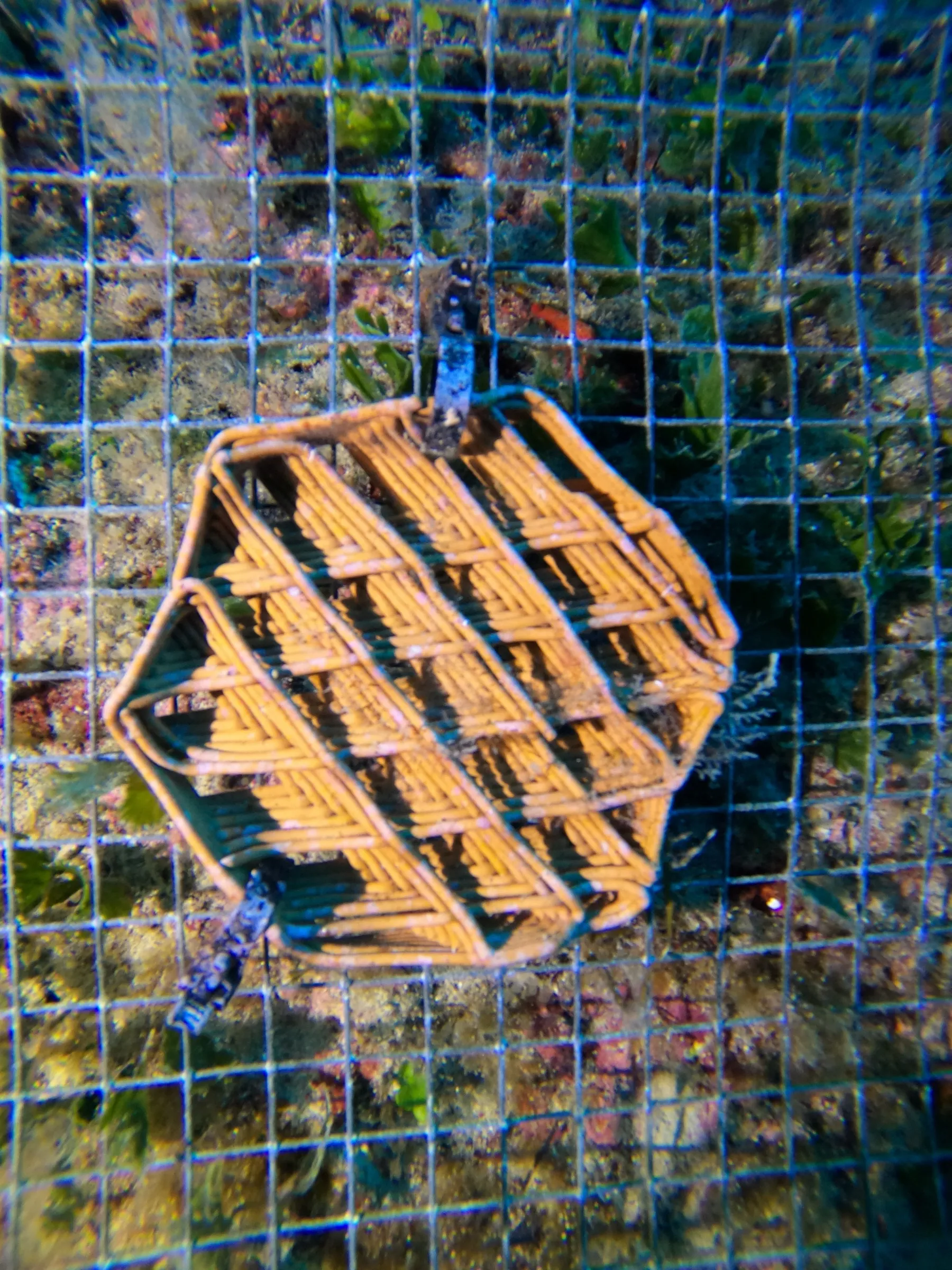 One month in.
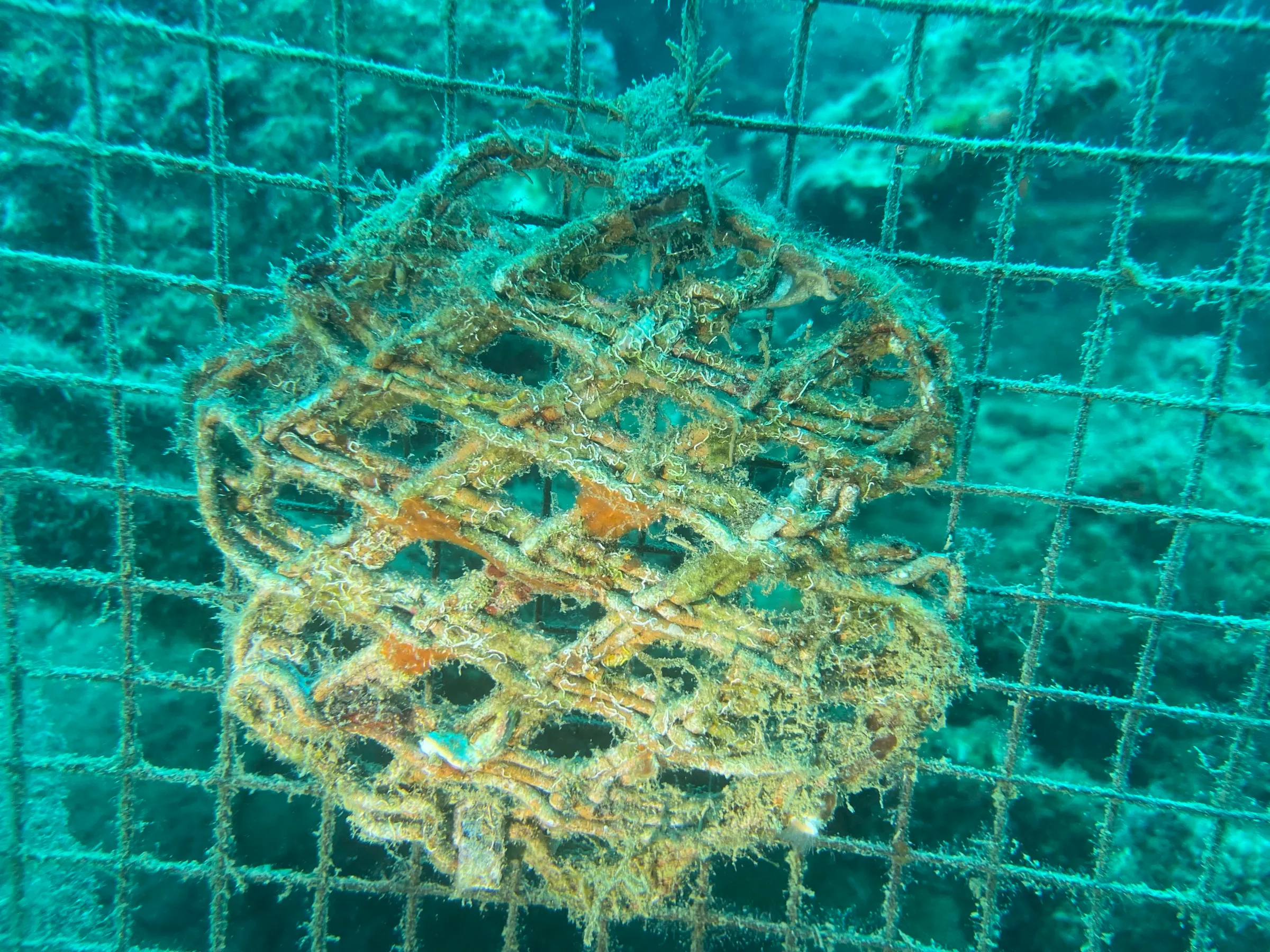
By twelve months the clay had all but disappeared under growth. That was the point of the test. It gave us a baseline: fired clay, in this sea, gets taken over.
A reef either hosts life or it does not.
what we don’t know yet.
This was a benchmark, not an experiment. One frame, one site, four pieces. The photos show that life settles on fired clay, and settles fast. They don’t tell us which surface it liked best, how many species came, or how long the clay will last. So we aren’t publishing numbers. We don’t have any yet that we would stand behind.
what’s next.
The diagrid is the first candidate for the water. Its joints, inserts, moulds and mix still need work. Then come the permits a structure on the seabed needs in Malta: the Planning Authority, ERA, Transport Malta and the Continental Shelf Department. If they come through, the plan is a small cluster at two sites, with monitoring from the first day and for five years after.
The monitoring will measure what actually settles. Then we’ll know a little more about what a reef wants from clay, and we’ll write it down here, including the parts that don’t work.