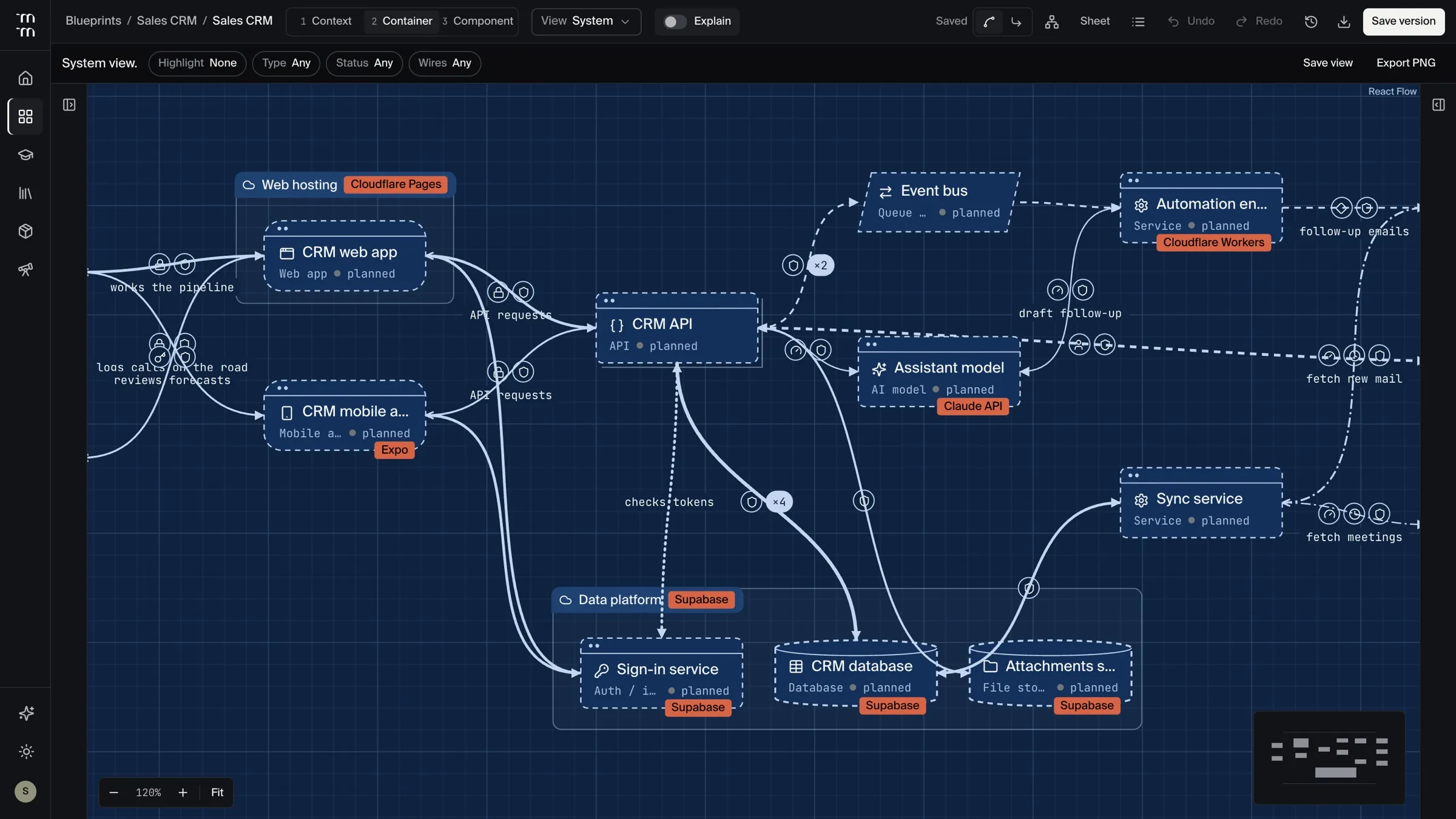
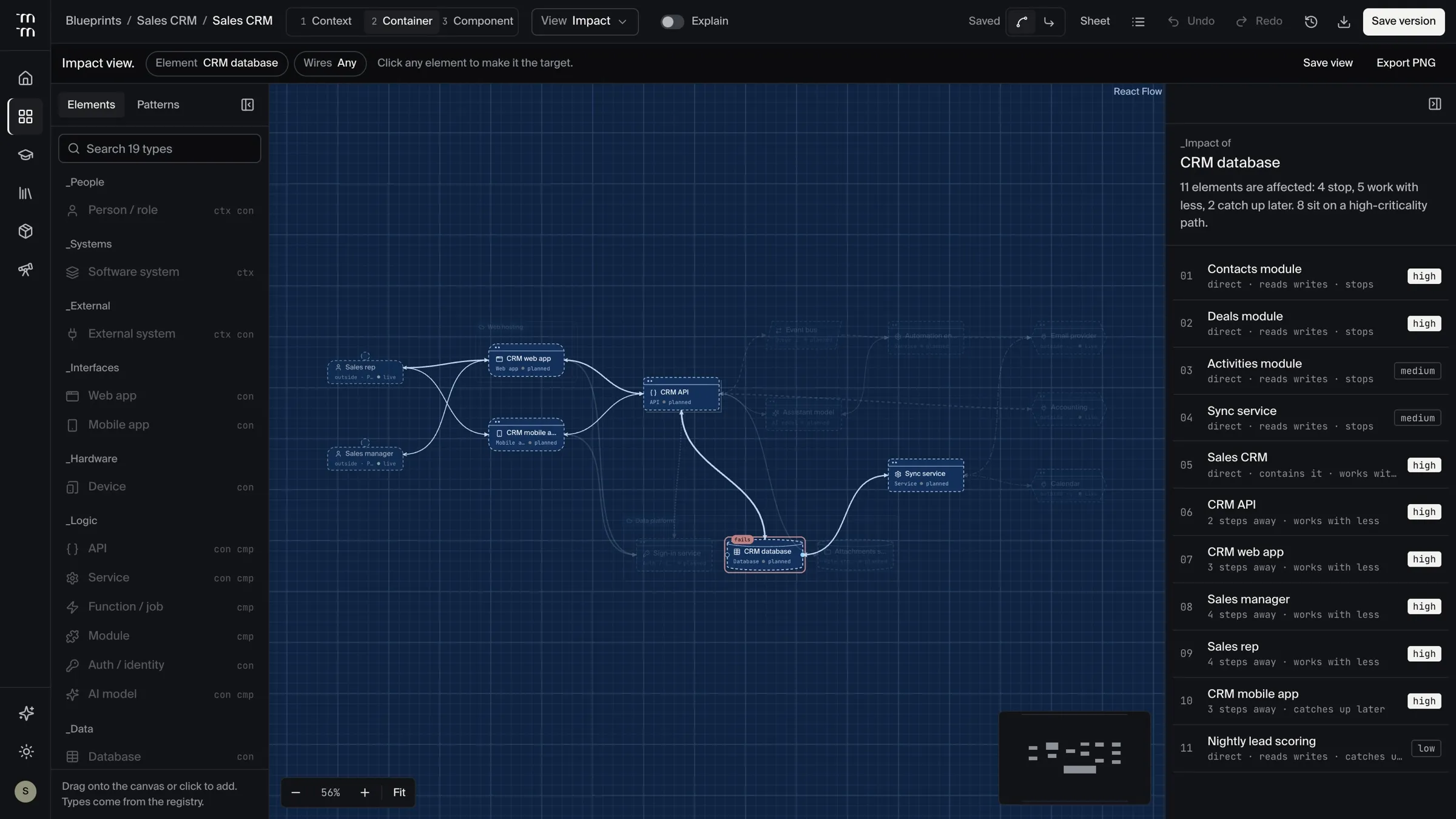
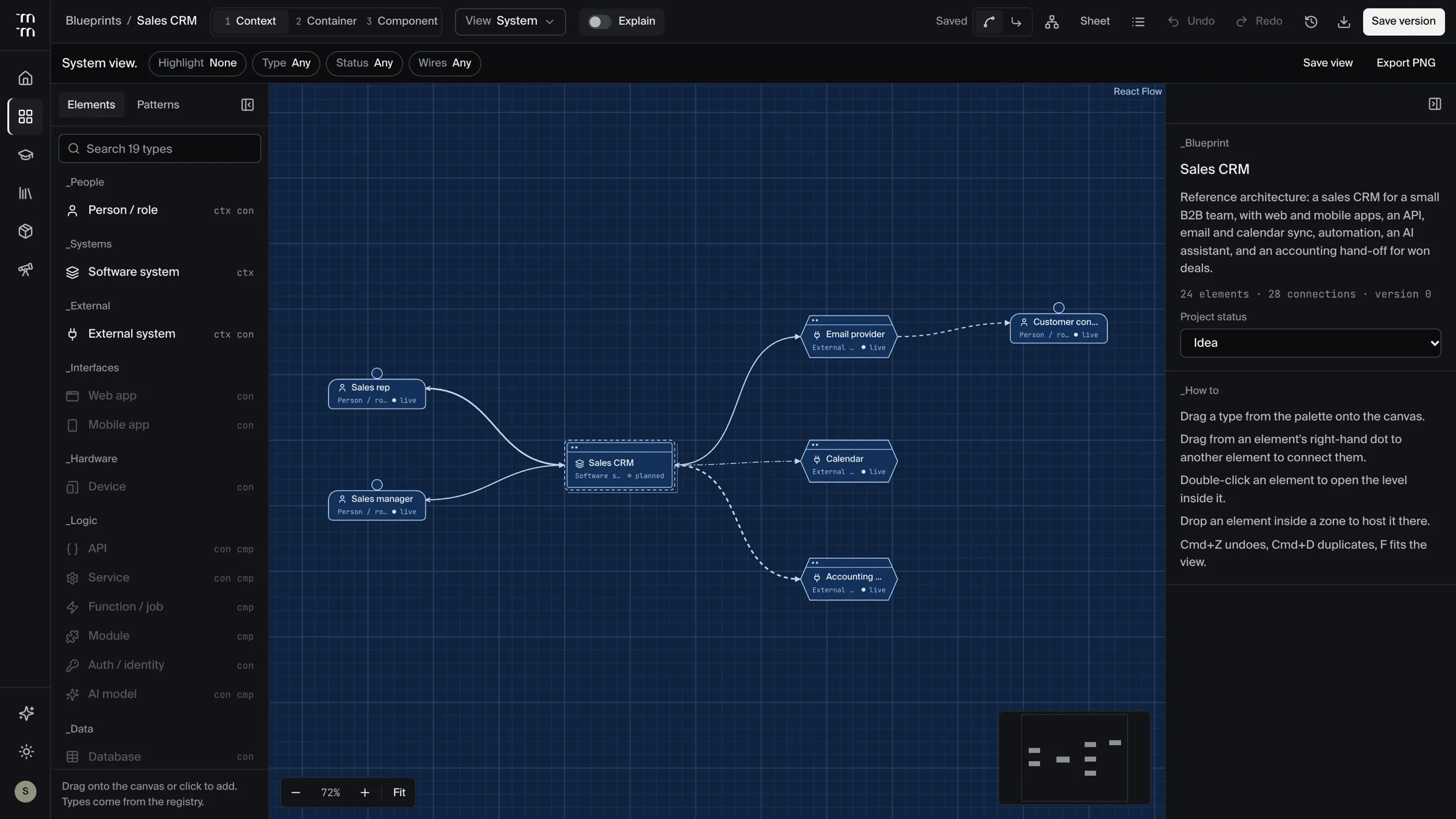
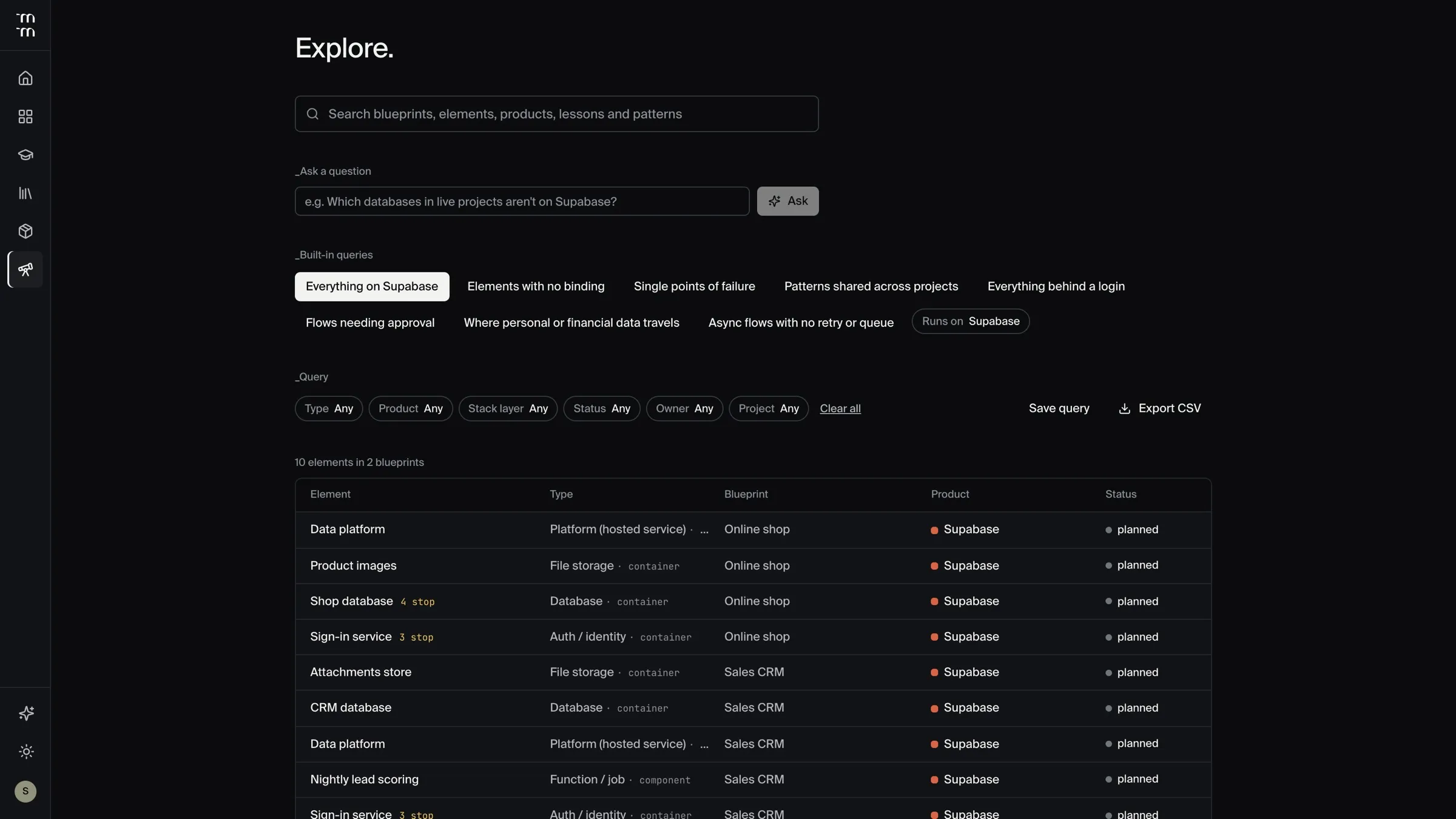
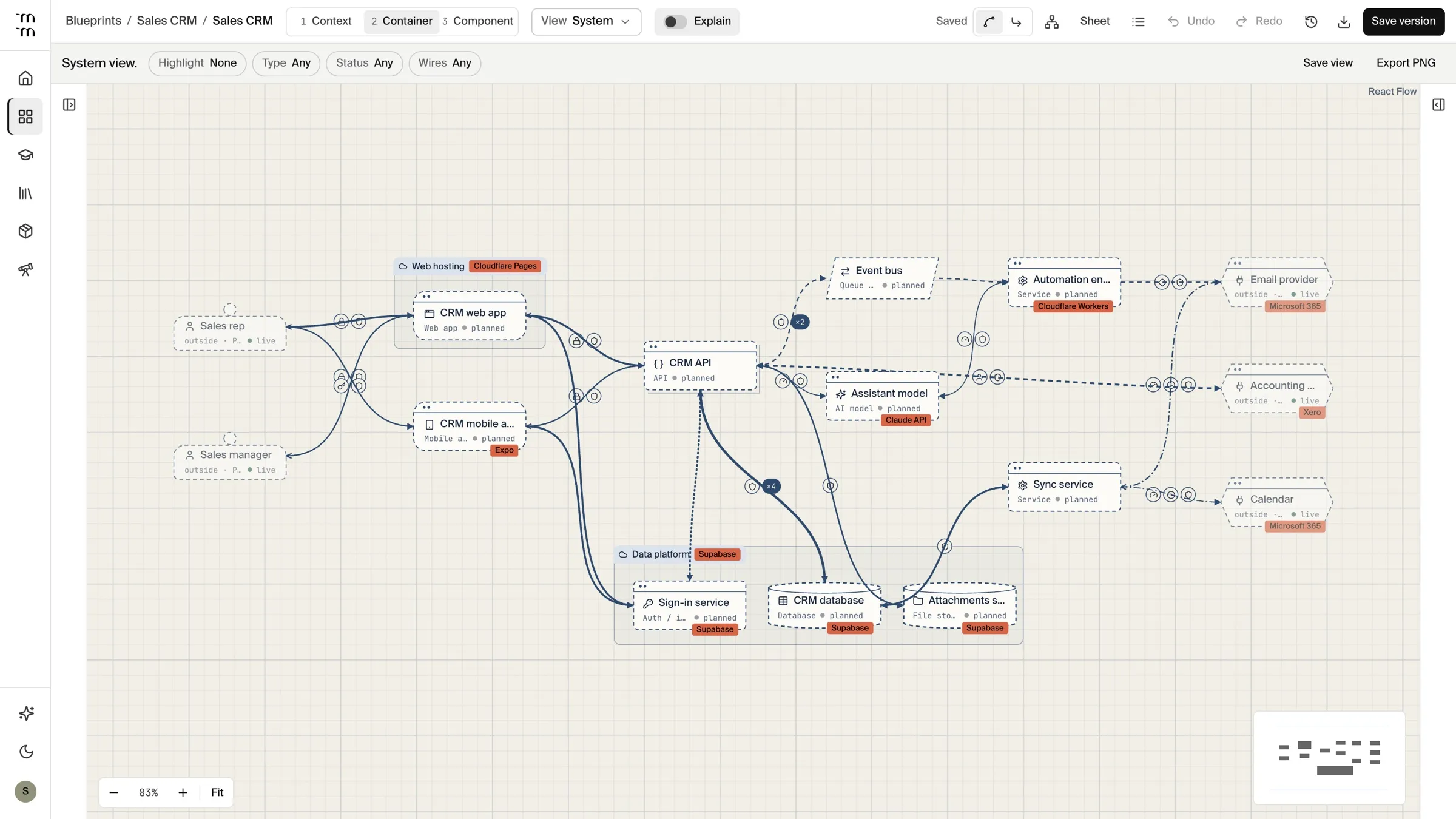
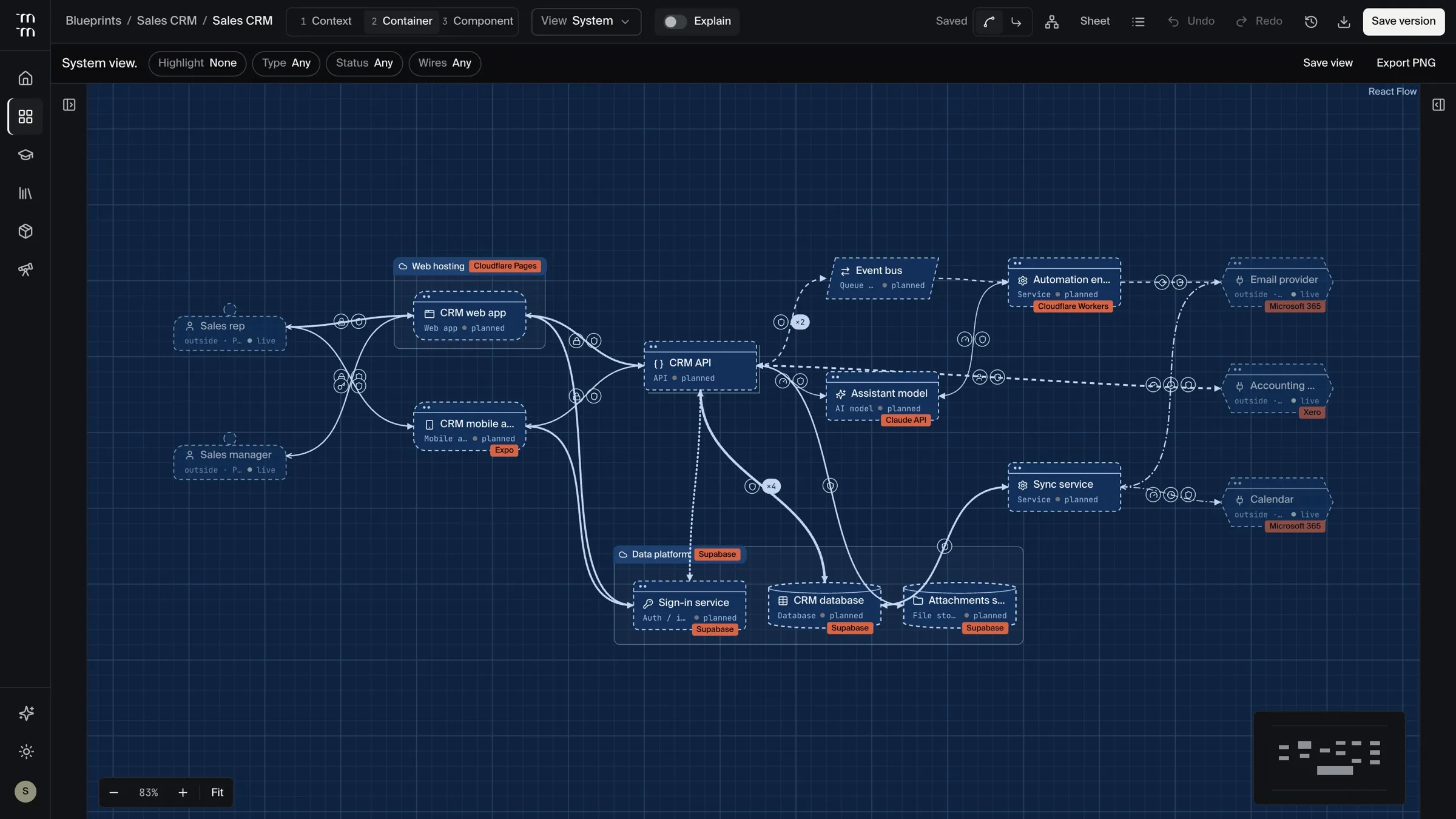
We draw our software on a blueprint sheet and wire it up. The drawing becomes a model we can question: what runs where, and what breaks.
what it is.
We’re an architecture and fabrication studio, but we also build a growing set of software to run the studio: quoting, invoicing, a client list, small apps. How those systems fit together lived in people’s heads and in scattered notes. There was no single drawing to come back to when we wanted to change one.
BlueHopper is that drawing. We place the parts of a system on a blueprint-blue sheet and wire them together. It borrows two ideas we already trust from buildings. From BIM: a door is an object that knows it’s a door, and every plan and schedule is cut from one model. From Grasshopper: a wire carries meaning, not just a line. So the drawing is data, and every picture is a view of it. Change the model once and every view follows.
where we use it.
Everyone in the studio uses it, about fourteen of us. Admins look after the element types and the team, editors draw the blueprints and keep the product catalogue up to date, and viewers read, ask questions and follow the lessons.
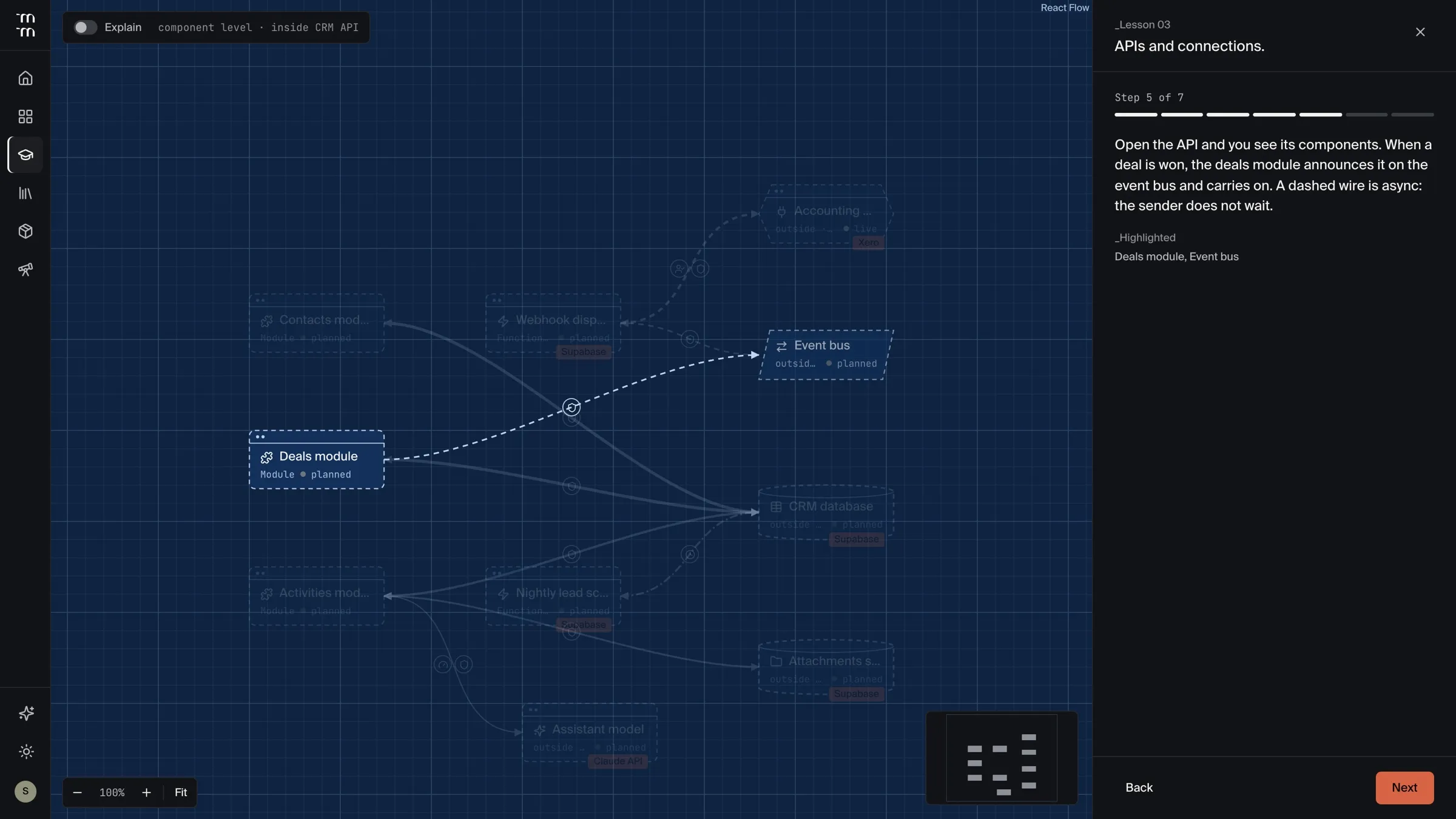
It’s made for designers and architects, not only engineers. The look is a drafting sheet and the words are plain. Explain mode says what any element or wire does, and every element is tied to a real product from a shared catalogue, with notes on its strengths, its limits and what it costs.
what it doesn’t do.
- It isn’t public, and it isn’t a product. It’s a tool for the studio.
- It doesn’t build or run the software. It’s a model of how a system fits together, and someone has to keep it up to date.
- It’s only as good as what we put in. The catalogue flags any product nobody has reviewed in six months.
- Claude is on every screen and can draft changes, but nothing is applied until a person approves it.
what’s next.
BlueHopper is moving to Matter Make ID, the one sign-in we’re building for all our tools, so the studio signs in to it the same way as everything else. It was registered there on 17 October 2026; the tool’s own side of the switch is still to do.
bluehopper, up close.