
printed clay, so far.
In 2021 we bought a clay printer because we wanted to make building parts: bricks, screens, cladding, made here, from a material that is everywhere. Five years on, here is what we have actually printed, and what we haven’t.
In 2021 we bought a clay printer, a WASP 2040. The reason was buildings. We wanted to make bricks, screens and cladding here in Malta, from a material that is plentiful, porous enough to cool by evaporation, and happy to take a different shape every time. That was the pitch we wrote at the time.
This is an honest account of what the printer has made since.
the printer.
It is a delta printer: three arms hold a nozzle over a round bed, and a tank of clay is pushed through it by compressed air. It lays the clay in thin coils, one on top of the other, straight from a drawing. A part can be up to 20 cm across and 40 cm tall. That limit matters, and we will come back to it.
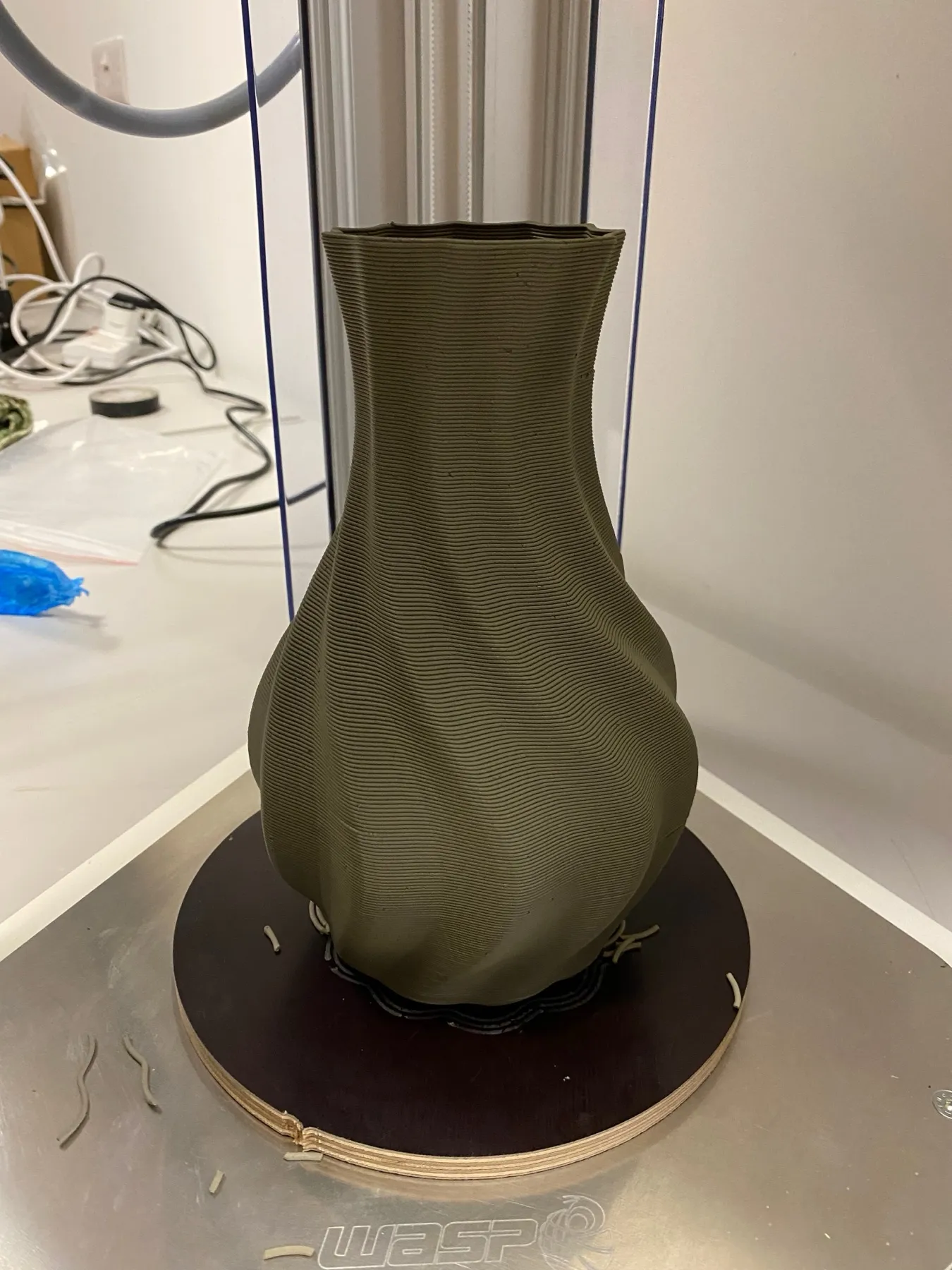 One of the first prints, December 2021, still on the bed.
what we printed.
Vases first. Like most people with a new clay printer, we started with vases: twisted, fluted, wobbly. They are the quickest way to learn how fast the clay can go, how steep a wall can lean, and how much a fresh print sags.
A week with students. In March 2022 we ran a week at the studio with our University of Malta students: develop a material system in printed terracotta. One group recorded how their pieces deformed as they dried and cracked in transit, which taught everyone as much as the pieces that survived. Another printed scale-like modules for cooling and evaporation, and grew plants in them.
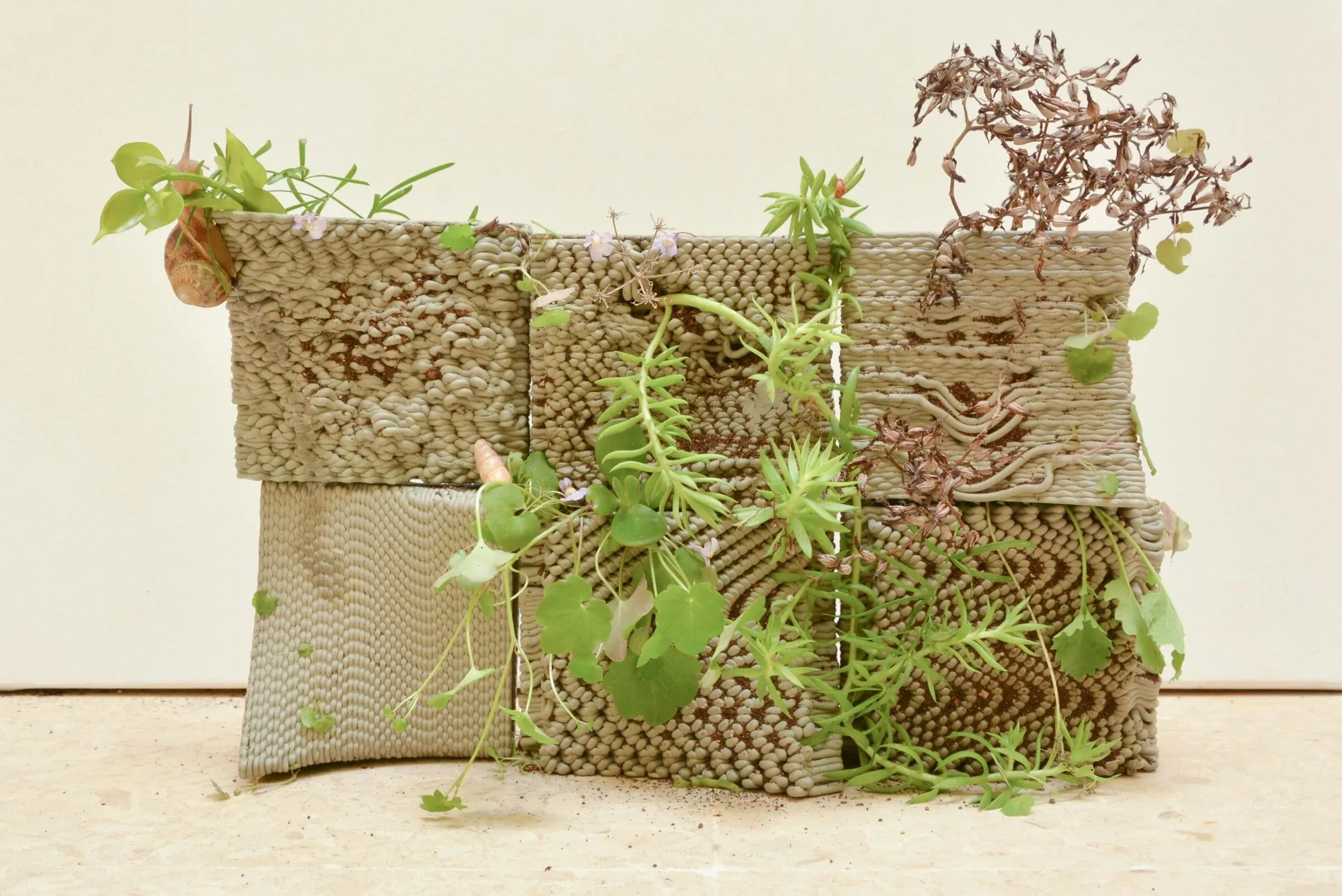 Living armour, a student project from the March 2022 week: printed clay modules with plants growing in them.
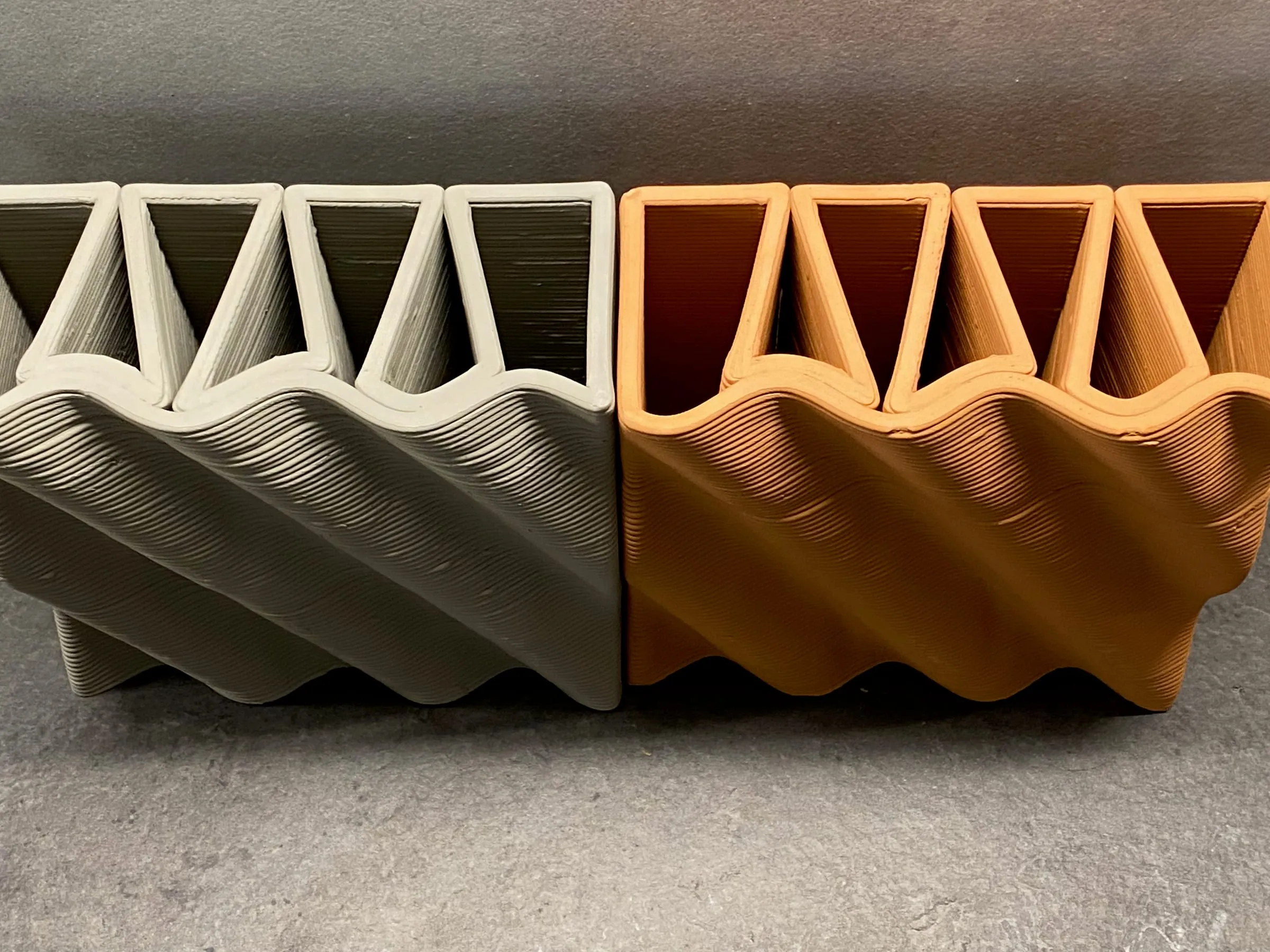
Blocks with cells inside. That summer we printed blocks with a wave-twisted face and triangular cells inside, the same block in a grey clay and in terracotta. We were thinking of them as bricks.
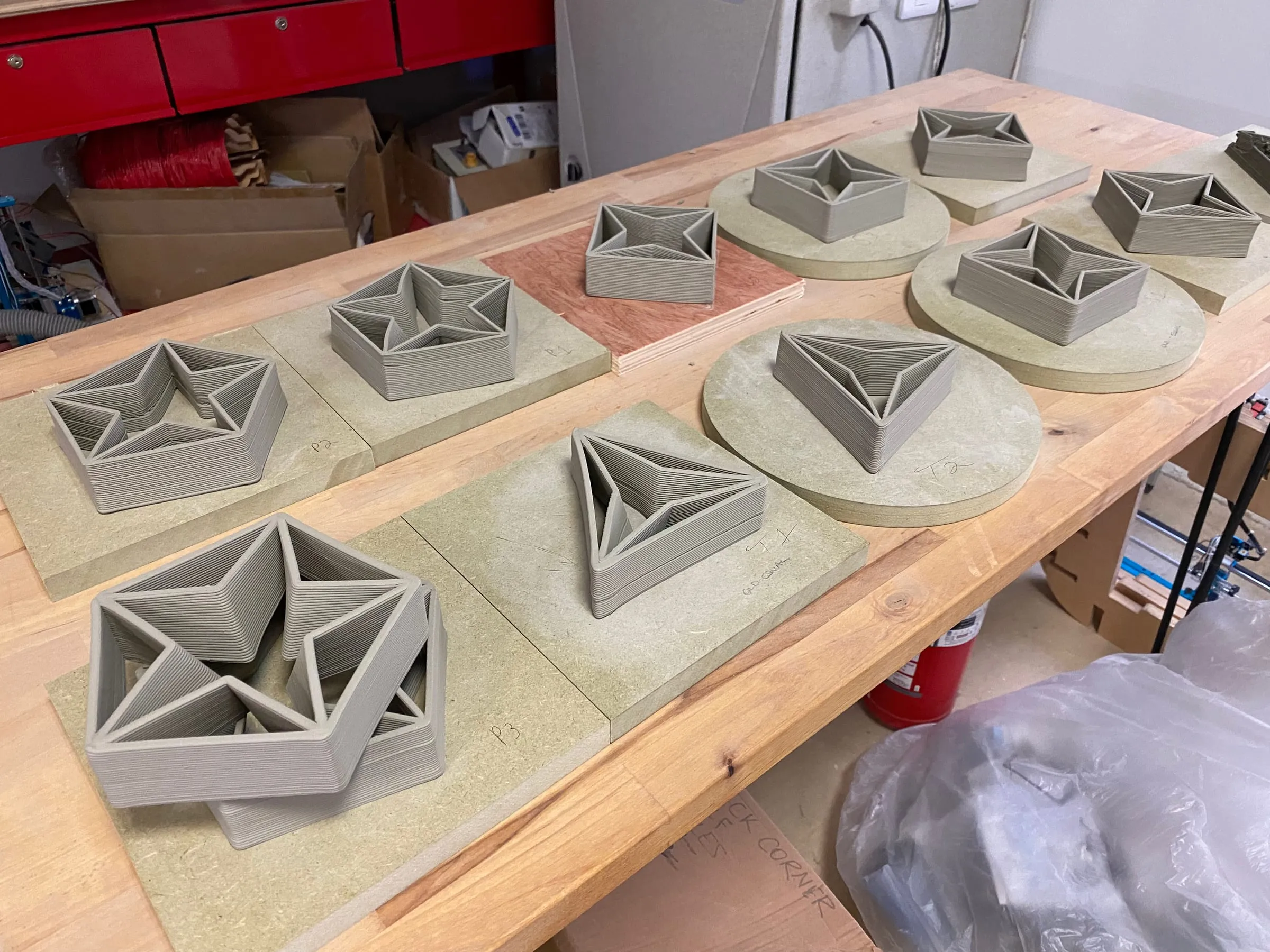 Fresh prints drying on the bench, summer 2022.
Clay for the sea. Then Sikka, our research into reefs, took the printer under water. We printed test pieces in red earthenware, fired them and left them on the seabed for a year, and we wrote the print files for the clay inserts of a reef module at a third of full size. The file notes say to allow for the clay shrinking. We wrote about that in what a reef wants from clay.
what we haven’t done.
None of it is on a building yet. We haven’t printed a screen, a sunscreen or a cladding panel, and the blocks haven’t gone into a wall. Part of the reason is size: a part 20 cm across is a brick, not a panel. In 2023 we drew an adapter to carry a clay extruder on the robot arm, which would take us past that limit. We haven’t run it.
We let the material argue back. Some tests fail; failure is information.
where it goes next.
The nearest use is still under water: the clay inserts for Sikka’s first reef modules. On land, the ideas we wrote down in 2021 still stand. When a printed piece goes on a building, it will be written up here, with what went wrong.